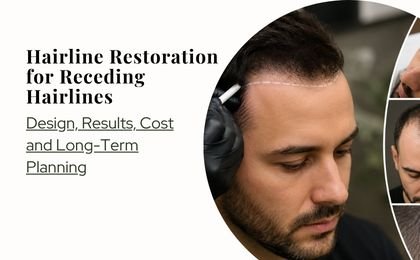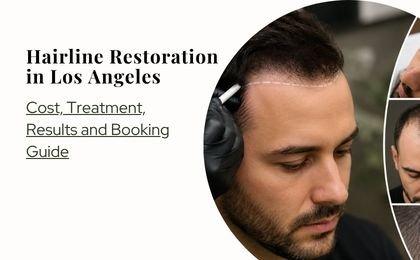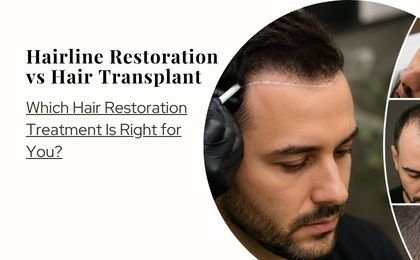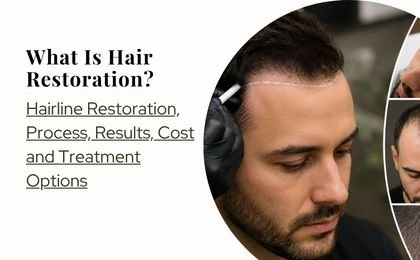
Hairline Restoration in Los Angeles
Customized Hairline Restoration with Scalp Micropigmentation
A Personalized Approach to Hairline Restoration
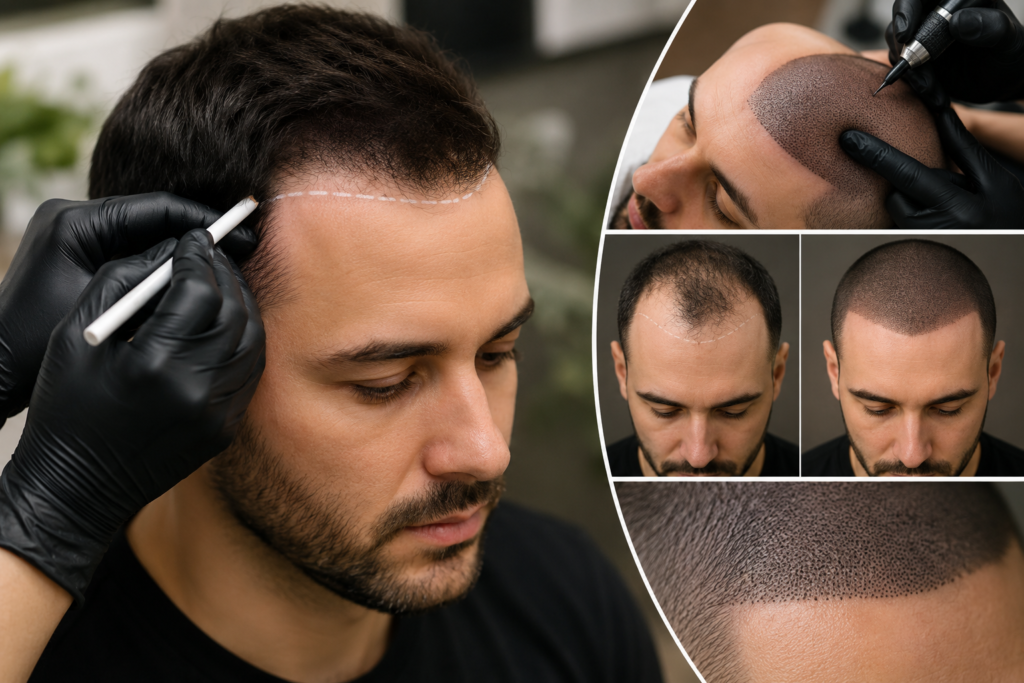
Professional hairline restoration with scalp micropigmentation uses carefully placed pigment impressions to visually recreate the appearance of closely cropped follicles along areas affected by recession or thinning. Rather than growing new hair, this cosmetic hair restoration treatment can help redefine the frontal hairline, soften temple recession, and reduce visible contrast between existing hair and scalp.
The hair restoration procedure is customized around your facial proportions, existing hair pattern, skin tone, preferred hairstyle, degree of recession, and likely future hair-loss pattern. A natural result should not look like a solid tattoo or an unnaturally sharp line. Instead, density is built gradually to blend with your existing follicles and create a believable transition.
Benefits of Hairline Restoration
Creates the Appearance of a Fuller Hairline
Helps Camouflage Receding Temples
Customized to Your Face
Provides a Nonsurgical Option
Works With Closely Shaved Styles
Can Reduce Visible Scalp Contrast
Built Gradually
Minimal Daily Styling
Personalized Long-Term Planning
Who Is Hairline Restoration For?
This hair restoration treatment may be appropriate if you:
- Have a receding frontal hairline
- Have thinning temples
- Keep your hair closely shaved
- Want a stronger-looking hairline without transplantation
- Have visible scalp around the frontal hairline
- Want to improve the appearance of selected hair-transplant scars
- Have stable hair loss suitable for cosmetic camouflage
- Understand that SMP does not grow hair
- Have realistic expectations
- Can follow the healing and maintenance plan
Particularly Suitable for a Buzz-Cut or Shaved Look
A closely shaved style can work particularly well with micropigmentation because real short follicles and pigment impressions can visually blend together.
The goal is not simply to make the scalp darker. The design should recreate the pattern, spacing, and gradual density associated with natural follicles.
✨ Process: How Hairline Restoration Works
Hairline Consultation
Your consultation begins with an assessment of:
- Current hairline
- Temple recession
- Existing density
- Crown or frontal thinning
- Hair color
- Scalp tone
- Facial proportions
- Previous SMP
- Previous hair transplantation
- Scalp scars
- Medical and skin history
- Desired style
A responsible consultation should also consider how your natural hair may change in the future.
Hairline Design
The proposed hairline is mapped before treatment.
Important design decisions include:
- Height
- Curve
- Temple position
- Edge softness
- Degree of definition
- Density
- Transition into natural hair
For many clients, an age-appropriate mature hairline looks more convincing than attempting to recreate a teenage hairline.
Pigment Selection
Pigment is selected to visually coordinate with your natural follicles, scalp, and overall appearance.
The objective is not simply to choose the darkest possible shade.
First Treatment Session
The first session establishes the foundation of the new visual hairline.
A conservative beginning allows the practitioner to see how the pigment settles before increasing density.
Healing Period
Fresh pigmentation can initially appear stronger because of redness and the immediate appearance of newly treated skin.
The healed result is more useful for determining what should happen next.
Density Building
Later sessions may:
- Increase density
- Improve temple blending
- Refine the frontal transition
- Fill lighter healed areas
- Improve symmetry
- Extend pigmentation into additional thinning zones
Final Assessment
Who Should Avoid Hairline Restoration?
Treatment may need to be postponed if you have:
- Active scalp infection
- Open wounds
- Folliculitis
- Active dermatitis
- Active eczema
- Psoriasis flare in the treatment area
- Severe scalp inflammation
- Significant sunburn
- Recent scalp surgery that has not healed
- A suspicious skin lesion
- Poorly controlled diabetes
- Significant wound-healing problems
- A bleeding disorder
- Medication affecting bleeding that has not been reviewed
- Significant immune suppression
- Previous serious tattoo-pigment reaction
- Strong tendency toward keloid formation
- Unrealistic expectations
Do not stop prescription medication independently. Medication questions should be discussed with the appropriate prescribing clinician.
Pregnancy or breastfeeding should also be disclosed before elective micropigmentation.
Hairline Restoration Healing Process
Immediately After Treatment
The hairline may appear:
- Red
- Slightly swollen
- Tender
- More defined than the final healed result
- Darker than expected initially
First Several Days
Redness and tenderness should gradually settle.
The scalp may feel dry or slightly tight. Avoid scratching, rubbing, or removing small flakes.
Following Weeks
The pigment appearance becomes softer and easier to evaluate.
Some impressions may heal lighter than others, which can be addressed when additional density is appropriate.
After All Sessions
The final hairline restoration result should blend more naturally once redness has resolved and all planned treatment has healed.
Hairline Restoration Aftercare
Follow the written aftercare provided for your treatment.
General guidance may include:
- Avoid scratching or picking
- Keep treated skin clean as instructed
- Avoid aggressive scalp products
- Avoid prolonged soaking
- Delay swimming during early healing
- Limit heavy sweating as instructed
- Avoid sauna and steam
- Avoid excessive friction
- Delay close shaving over fresh treatment when instructed
- Protect healed pigment from strong UV exposure
- Avoid unapproved products on freshly treated skin
Los Angeles County identifies infection and bloodborne-pathogen transmission among the principal risks associated with body-art procedures, which is why registered practitioners, facility permitting, and infection-control practices matter.
Hairline Restoration Touch-Ups
Initial Refinement
Hairline restoration is usually built progressively. Additional sessions can refine the hairline after the previous pigment has healed.
Maintenance
Pigment appearance can gradually soften over time, and natural hair loss may also continue.
Future maintenance may be considered when:
- Pigment has faded
- A hairline needs refreshing
- Temple recession has progressed
- Additional scalp becomes exposed
- Existing density needs rebalancing
- Previous work requires refinement
Future Hair Loss
A major part of long-term planning is recognizing that SMP does not stop recession.
If natural hair continues thinning, new exposed scalp may eventually require additional treatment or medical evaluation.
Los Angeles' Trusted Permanent Makeup Experts
Why Choose Beverly Microblading Center?

Licensed & Certified Professionals

11+ Years of Experience in Microblading

30+ Years of Experience in PMU

Customized Brow Mapping

Premium Quality Pigments

Single-Use Sterile Needles

Complimentary Consultation

Thousands of Happy Clients

Luxury, Clean & Welcoming Studio
Testimonials
Trusted Feedback from Real Clients
— Client, Westwood
— Client, Beverly Hills
— Client, Century City
— Client, Brentwood
— Client, Santa Monica
Everything You Need to Know About Hairline Restoration
Frequently Asked Questions
What Is Hair Restoration?
How Does Hairline Restoration With SMP Work?
What Is the Best Hairline Restoration Option?
Does Hairline Restoration Grow New Hair?
How Many Hairline Restoration Sessions Will I Need?
Is Hairline Restoration Permanent?
How Much Does Hairline Restoration Cost?
Is SMP Better Than a Hair Transplant for a Receding Hairline?
Can Hairline Restoration Fix Temple Recession?
Where Can I Get Hairline Restoration in Los Angeles?
Featured Post
Learn More From Our Hairline Restoration Blogs