Personalized Eye Lift in Los Angeles
Customized Upper and Lower Eye Lift for a Brighter, More Refreshed Appearance
Eye Lift (Upper/Under Eye)
An eye lift is a broad term used for treatments intended to improve concerns such as loose upper-eyelid skin, under-eye bags, lower-eyelid laxity, fine lines, or a tired-looking appearance. Depending on the cause and severity of the concern, an eye lift procedure may involve a professionally selected nonsurgical treatment or blepharoplasty, which is commonly known as eye lift surgery. Surgical blepharoplasty may be performed on the upper eyelids, lower eyelids, or both.
There is no one-size-fits-all approach. An upper eye lift focuses on excess skin, puffiness, or heaviness above the eyes, while a lower eye lift or under eye lift may address bags, loose-looking skin, or selected lower-eyelid concerns. Dark circles caused by pigmentation, visible blood vessels, shadows, or volume loss may require a different solution and may not improve through tightening or surgery alone.

Benefits of Eye Lift
A More Rested-Looking Eye Area
A carefully selected treatment may soften the appearance of tired or heavy-looking eyes without changing the natural character of your face.
Customized Upper-Eyelid Treatment
An upper eye lift may be considered when loose skin, puffiness, or heaviness affects the natural eyelid contour. In more advanced cases, upper blepharoplasty may remove or reposition selected tissue. Upper-eyelid surgery can be cosmetic, functional, or both when excess tissue affects the visual field.
Focused Under-Eye Improvement
A lower eye lift or under eye lift may address selected concerns involving under-eye bags, loose-looking skin, puffiness, or fine wrinkles. The provider must first determine whether the concern comes from skin laxity, fat positioning, fluid retention, pigmentation, volume loss, or another cause.
Upper and Lower Eye Lift Planning
An upper and lower eye lift allows both areas to be evaluated together. Treating one area without considering the other can occasionally create an unbalanced appearance, so the entire eye region should be assessed before treatment.
Surgical and Nonsurgical Options
Mild concerns may be evaluated for an appropriate nonsurgical eye lift treatment, while more significant excess skin or prominent under-eye bags may require surgical consultation.
Natural-Looking Treatment Goals
Possible Functional Improvement
Personalized Recovery Planning
Who Is Eye Lift For?
An eye lift consultation may be appropriate if you:
- Have loose or heavy-looking upper-eyelid skin
- Notice persistent under-eye bags
- Have mild lower-eyelid laxity
- Want a brighter, more rested-looking eye area
- Feel that your eyelid contour has become less defined
- Have realistic expectations
- Can follow aftercare carefully
- Can accommodate the expected recovery
- Want to compare surgical and nonsurgical options
- Are prepared to discuss your medical and eye-health history
An Upper Eye Lift May Be Considered For
- Excess upper-eyelid skin
- Upper-eyelid puffiness
- A heavy-looking eyelid contour
- Skin folds affecting eyelid definition
- Selected functional concerns involving peripheral vision
A Lower or Under Eye Lift May Be Considered For
- Persistent under-eye bags
- Loose-looking lower-eyelid skin
- Selected fine wrinkles
- Puffiness related to prominent fat compartments
- Lower-eyelid contour concerns
✨ Process: How Eye Lift Works
Comprehensive Consultation
Your appointment begins with a discussion of:
- Your primary eye-area concern
- Desired improvement
- Previous eyelid or eye surgery
- Vision problems
- Dry-eye symptoms
- Contact-lens use
- Allergies
- Thyroid conditions
- Current medications
- Blood-thinning medication
- Previous cosmetic treatments
Eyelid-surgery consultations commonly include a review of medical conditions, medications, eye symptoms, treatment goals, and facial anatomy before a surgical plan is recommended.
Eye-Area Assessment
The provider evaluates:
- Upper-eyelid skin
- Lower-eyelid skin
- Under-eye bags
- Brow position
- Eyelid position
- Facial volume
- Skin texture
- Natural asymmetry
- Ability to close the eyes
- Signs of irritation or active inflammation
This step helps determine whether the concern requires an eye lift treatment, brow treatment, volume-focused procedure, medical eye evaluation, or surgery.
Clinical Photography
Standardized photographs may be taken from several angles. These images document your starting point and support a more accurate comparison after swelling and bruising have resolved.
Personalized Recommendation
Your treatment plan may involve:
- A nonsurgical eye-area treatment
- Upper-eyelid surgery
- Lower-eyelid surgery
- Combined upper and lower blepharoplasty
- A staged treatment plan
- Referral for medical or ophthalmic evaluation
- A different cosmetic procedure better suited to the concern
Nonsurgical Eye Lift Treatment
A nonsurgical treatment may be considered for selected mild concerns. The exact process depends on the technology being offered and should be explained before booking.
Nonsurgical treatment cannot remove substantial excess skin or reposition tissue in the same way as surgery.
Upper Eye Lift Surgery
During upper blepharoplasty, the surgeon creates carefully planned incisions within or near the natural upper-eyelid crease. Selected excess skin and, when appropriate, fat or other tissue may be removed or repositioned before the incision is closed.
Lower or Under Eye Lift Surgery
A lower-eyelid procedure may use an incision inside the lower eyelid or near the lash line, depending on the concern and surgical plan. The surgeon may remove or reposition selected fat and address excess skin when necessary. The approach must be personalized to reduce the risk of an unnatural or pulled-down lower eyelid.
Upper and Lower Eye Lift
A combined procedure treats both eyelid regions during the same surgical plan. Suitability depends on health, anatomy, expected surgical time, recovery requirements, and the surgeon’s assessment.
Immediate Post-Treatment Review
After treatment, the provider evaluates the eye area and explains what level of swelling, bruising, redness, tenderness, or sensitivity is expected.
Written Aftercare
You receive instructions covering:
- Eye and incision care
- Approved products
- Medication
- Cold compresses when appropriate
- Activity restrictions
- Sleeping position
- Contact-lens use
- Makeup
- Sun protection
- Warning signs
- Follow-up appointments
Who Should Avoid Eye Lift?
An eye lift may need to be postponed, modified, or avoided when you have:
- Active eye or eyelid infection
- Uncontrolled dry-eye symptoms
- Significant eyelid inflammation
- Open wounds near the treatment area
- Active cold sores near the eyes
- Recent eye surgery without clearance
- Uncontrolled diabetes
- Poor wound healing
- Immunosuppression
- A bleeding disorder
- Blood-thinning medication that has not been medically reviewed
- Uncontrolled high blood pressure
- A history of problematic scarring
- A medical condition affecting the eyes
- Unrealistic expectations
- Inability to follow aftercare
- Active smoking or nicotine use that may affect healing
Do not discontinue prescribed medication independently. Medication adjustments should be made only by the prescribing clinician and treating surgeon.
Eye Lift Healing Process
Healing depends on whether you receive a nonsurgical treatment, an upper eye lift, a lower eye lift, or combined eye lift surgery.
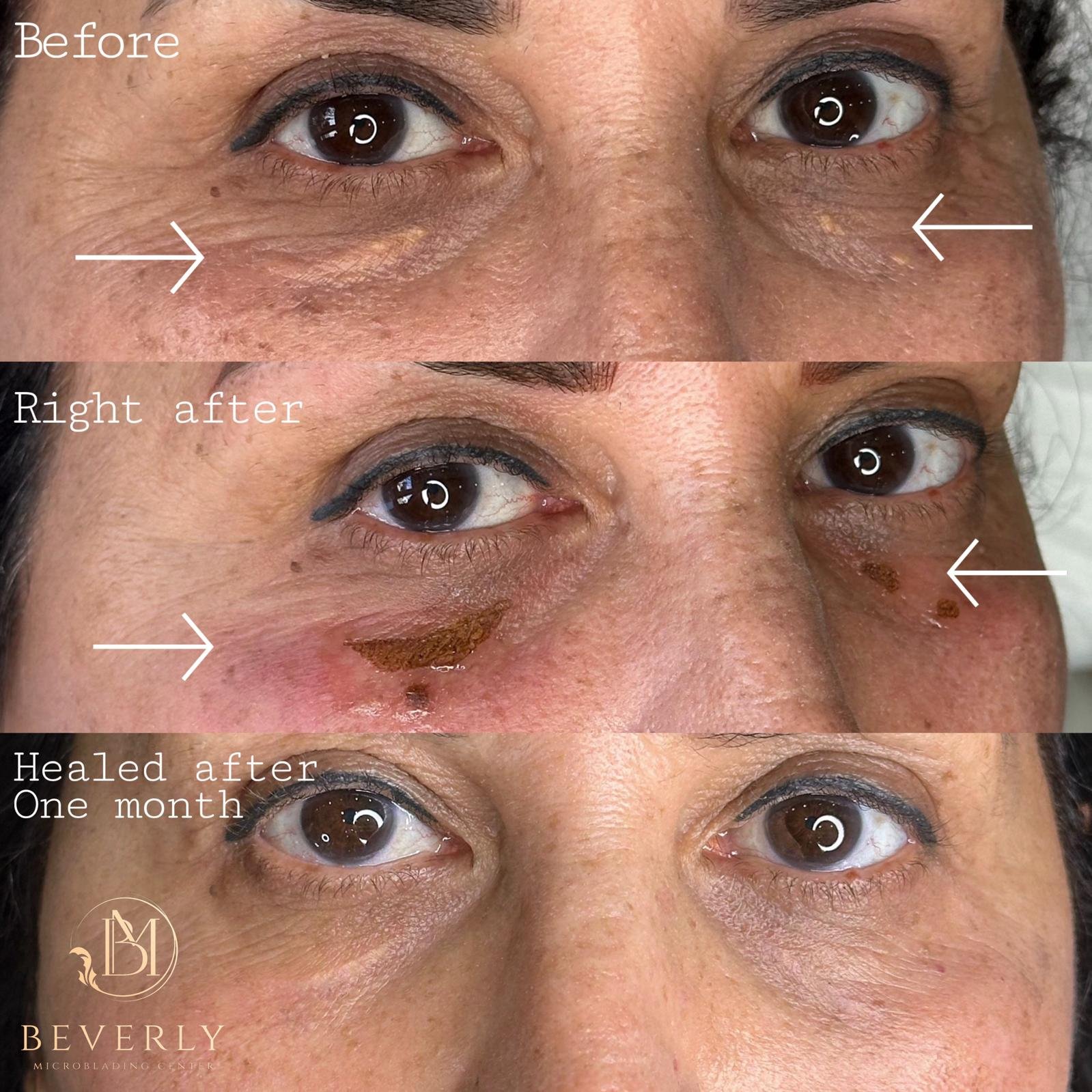
Immediately After Treatment
Days 1–3
Days 4–10
Weeks 2–4
Eye Lift Aftercare
Always follow the instructions provided for your specific eye lift procedure.
General aftercare may include:
- Keep the treatment area clean as instructed
- Wash your hands before touching the eye area
- Use prescribed ointments or drops correctly
- Apply cold compresses only as directed
- Sleep with your head elevated when recommended
- Avoid rubbing or pulling the eyelids
- Do not pick at incision lines or healing skin
- Avoid eye makeup until approved
- Pause contact-lens use when instructed
- Avoid strenuous exercise
- Avoid bending and heavy lifting
- Avoid swimming, saunas, and steam rooms
- Protect the eyes from dust and wind
- Wear dark sunglasses outdoors
- Use approved sun protection
- Avoid smoking and nicotine
- Attend every scheduled follow-up
The American Society of Plastic Surgeons advises careful eye-area care, prescribed medication use, follow-up, and consistent sun protection during eyelid-surgery recovery.
Eye Lift Touch-Ups
Touch-ups depend on the type of eye lift treatment performed.
What to Expect
- Initial Follow-Up: A follow-up appointment allows the provider to assess healing, eyelid position, vision-related symptoms, swelling, bruising, incision care, and symmetry. Surgical patients may require several follow-up visits rather than one routine touch-up.
- Nonsurgical Treatment Series: Some nonsurgical treatments may require a carefully spaced series. The timing should depend on the technology, skin response, and degree of improvement—not on a standard package alone. Repeating treatment too soon may increase irritation, inflammation, pigment changes, or injury.
- Surgical Revision: An early difference between the eyes does not automatically mean revision is needed. Swelling and healing can temporarily affect symmetry. A surgical revision should be discussed only after adequate healing unless there is a medical problem requiring earlier intervention. Revision is never guaranteed and carries its own risks.
- Longevity: Surgical results can remain visible for years, but no eye lift surgery permanently stops aging. Skin, brows, facial volume, and surrounding tissues continue changing over time.
Los Angeles' Trusted Permanent Makeup Experts
Why Choose Beverly Microblading Center?

Licensed & Certified Professionals

11+ Years of Experience in Microblading

30+ Years of Experience in PMU

Customized Brow Mapping

Premium Quality Pigments

Single-Use Sterile Needles

Complimentary Consultation

Thousands of Happy Clients

Luxury, Clean & Welcoming Studio
Testimonials
Trusted Feedback from Real Clients
— Client, Westwood
— Client, Beverly Hills
— Client, Century City
— Client, Brentwood
— Client, Santa Monica
Everything You Need to Know About Eye Lift
Frequently Asked Questions
What Is an Eye Lift?
An eye lift is a general term for procedures intended to refresh the upper or lower eyelids. It may refer to a nonsurgical eye-area treatment or blepharoplasty, which is surgery performed on the upper eyelids, lower eyelids, or both.
What Is the Difference Between an Upper Eye Lift and a Lower Eye Lift?
An upper eye lift focuses on loose skin, puffiness, or heaviness above the eyes. A lower eye lift focuses on under-eye bags, excess lower-eyelid skin, and selected contour concerns below the eyes.
Is an Under Eye Lift the Same as Lower Eyelid Surgery?
The term under eye lift is often used to describe lower blepharoplasty, but it may also be used for nonsurgical treatments. Ask the provider exactly which procedure is being recommended and what concern it is intended to address.
What Is an Upper and Lower Eye Lift?
An upper and lower eye lift treats both eyelid regions within one plan. It may involve combined upper and lower blepharoplasty or a personalized combination of procedures.
Can an Eye Lift Remove Dark Circles?
It depends on the cause. Surgery or tightening may improve shadows created by bags or loose skin, but pigmentation, visible veins, thin skin, allergies, and volume loss may require different treatment.
Is Eye Lift Surgery Painful?
Anesthesia and comfort measures are used during surgery. Tightness, irritation, tenderness, dryness, bruising, and swelling may occur during recovery. Your surgeon should explain the anesthesia plan and expected discomfort before treatment.
How Long Does Eye Lift Surgery Take to Heal?
Initial bruising and swelling commonly improve over the first several weeks, while incision maturation and residual swelling may continue for longer. Recovery differs according to the procedure, health, anatomy, and individual healing response.
Can a Nonsurgical Eye Lift Replace Surgery?
A nonsurgical treatment may improve selected mild concerns, but it cannot remove substantial excess skin or reposition eyelid tissues in the same way as blepharoplasty.
What Are the Risks of Eye Lift Surgery?
Possible risks include bleeding, infection, dry eyes, difficulty closing the eyes, changes in sensation, lower-eyelid malposition, persistent pain, scarring, asymmetry, need for revision, and rare vision changes. These risks should be reviewed directly with the surgeon before consent.
Where Can I Book an Eye Lift in Los Angeles?
You can book an eye lift in Los Angeles consultation at our Westwood location, convenient for clients from Beverly Hills, Brentwood, Santa Monica, Century City, Bel Air, Culver City, and surrounding communities.
Featured Post
Learn More From Our Eye Lift Blogs