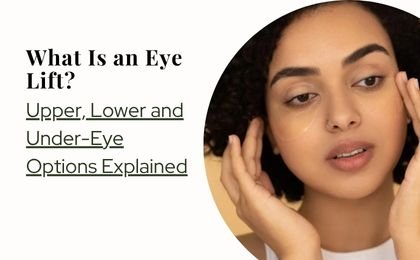
The skin and supporting tissues around the eyes can change with age, genetics, sun exposure, allergies, facial movement, and changes in facial volume. Upper eyelid skin may begin to look heavy, under-eye bags can become more noticeable, and the lower eyelid area may develop fine lines, puffiness, or a hollowed appearance.
An eye lift is a broad term for cosmetic or functional procedures intended to refresh the upper eyelids, lower eyelids, or both. It may describe surgical blepharoplasty or, in some situations, a nonsurgical eye lift treatment intended for a mild skin or texture concern.
The most suitable option depends on what is causing the tired or heavy appearance. Loose upper-eyelid skin, prominent fat beneath the eyes, brow descent, pigmentation, fluid retention, eyelid-muscle weakness, and facial volume loss require different solutions. A treatment that improves one concern may have little effect on another.
A personalized consultation for an eye lift in Los Angeles should therefore evaluate the complete eye area rather than automatically recommending surgery or a specific device. Our Westwood location is convenient for clients from Beverly Hills, Brentwood, Santa Monica, Century City, Bel Air, Culver City, and nearby communities who want to compare their options before booking.
What Is an Eye Lift?
When someone asks what is an eye lift, they may be referring to eyelid surgery, also known as blepharoplasty. This surgical procedure can be performed on the upper eyelids, lower eyelids, or both. It may improve loose upper-eyelid skin, eyelid puffiness, under-eye bags, lower-eyelid skin, and selected fine wrinkles. Upper-eyelid surgery may also have a functional purpose when excess tissue affects the visual field.
The term can also be used more generally for nonsurgical procedures intended to improve mild eye-area laxity, texture, or fine lines. Depending on the concern, these options may include carefully selected laser, radiofrequency, microneedling, plasma-based, injectable, or skincare treatments.
A nonsurgical treatment is not the same as eye lift surgery. It cannot surgically remove substantial excess skin, reposition prominent fat, or correct more advanced eyelid changes. Marketing terms such as “instant eye lift” should therefore be reviewed cautiously.
Why Does the Eye Area Begin to Look Tired?
The eye area is complex. Several concerns can create a tired appearance, and they do not all respond to the same procedure.
Excess Upper-Eyelid Skin
Skin above the eyes may gradually form folds that reduce visible eyelid space. In more advanced cases, the excess tissue can interfere with peripheral vision or make reading and driving more difficult.
An upper eye lift may be considered when excess skin or tissue is the primary issue. However, the provider must also evaluate the eyebrows, forehead, and eyelid-opening muscles before recommending surgery.
Under-Eye Bags
Under-eye bags may become visible when fat around the lower eyelids becomes more prominent or the supporting tissues change. A lower eye lift may remove or reposition selected fat, depending on the anatomy and surgical plan.
Temporary puffiness caused by allergies, lack of sleep, diet, or fluid retention may not require surgery.
Lower-Eyelid Skin Laxity
The lower eyelid may develop fine wrinkles, loose-looking skin, or reduced support. Treatment must be carefully planned because excessive skin removal can affect the natural position of the lower eyelid.
Under-Eye Hollows
A shadow beneath the eyes can be caused by volume loss rather than bags or loose skin. Surgery may not be the only solution, and tightening alone may make limited improvement when hollowing is the main concern.
Dark Circles
Dark circles can result from pigmentation, thin skin, visible blood vessels, allergies, shadows, facial anatomy, or volume loss. An under eye lift may soften shadows associated with bags, but it cannot guarantee removal of pigment-based dark circles.
Brow Descent
A low brow can push tissue toward the upper eyelids and create a heavy appearance. Removing eyelid skin without evaluating brow position may not fully correct the concern.
True Eyelid Drooping
True eyelid ptosis occurs when the upper eyelid itself sits lower than expected, often because of changes in the muscle or tendon responsible for lifting it. Blepharoplasty and ptosis repair are different procedures, although they may sometimes be performed within the same treatment plan. ASPS advises that upper-eyelid heaviness may be related to brow changes or eyelid ptosis and requires a complete anatomical assessment.
Upper Eye Lift: What Does It Treat?
An upper eye lift usually refers to upper blepharoplasty. It may be considered for:
- Loose upper-eyelid skin
- Skin folds that reduce eyelid definition
- Upper-eyelid puffiness
- Fatty deposits above the eye
- A heavy-looking upper eyelid
- Selected visual-field concerns caused by excess tissue
During the procedure, the surgeon typically places an incision within or close to the natural upper-eyelid crease. Selected skin and, when appropriate, fat or other tissue may be removed or repositioned. The incision is then carefully closed.
The amount of tissue removed must be planned conservatively. Removing too much can make closing the eyes difficult, increase dryness, or create an unnatural appearance.
Cosmetic vs Functional Upper Eye Lift
A cosmetic upper eye lift is performed primarily to change appearance. A functional procedure is performed when excess upper-eyelid tissue contributes to documented visual or daily-activity problems.
Someone seeking functional correction may need additional examination, visual-field testing, photography, or insurance documentation. Coverage requirements differ by plan, so cosmetic and functional treatment should not be assumed to follow the same payment process.
Lower Eye Lift and Under Eye Lift
A lower eye lift or under eye lift usually refers to lower blepharoplasty. It may be considered for:
- Under-eye bags
- Prominent lower-eyelid fat
- Loose lower-eyelid skin
- Selected fine wrinkles
- Reduced definition between the eyelid and cheek
- Lower-eyelid contour concerns
There are different surgical approaches.
Incision Below the Lash Line
An incision may be placed close to the lower eyelashes. This approach allows the surgeon to address selected skin and fat concerns.
Incision Inside the Lower Eyelid
A transconjunctival incision is made inside the lower eyelid. It can allow fat to be removed or repositioned without an external skin incision, although it does not directly remove excess outer skin.
The appropriate technique depends on lower-eyelid support, skin quality, fat position, facial structure, previous surgery, and the desired result.
A responsible consultation should not assume that every under-eye bag requires fat removal. In some cases, repositioning tissue may create a smoother transition between the eyelid and cheek. In others, a different procedure may be more suitable.
What Is an Upper and Lower Eye Lift?
An upper and lower eye lift treats both eyelid regions within the same surgical plan.
This option may be considered when loose upper-eyelid skin and under-eye bags both contribute to a tired appearance. Treating the complete eye area can create a more balanced result, but it also involves broader healing than treating one region alone.
A combined procedure does not mean that identical techniques are used above and below the eyes. The upper eyelids may require carefully measured skin removal, while the lower eyelids may require fat repositioning, skin treatment, support procedures, or a combination approach.
The decision to combine procedures depends on:
- General health
- Eye health
- Eyelid anatomy
- Dry-eye symptoms
- Amount of tissue being treated
- Anesthesia plan
- Expected recovery
- Surgeon assessment
- Personal treatment goals
Nonsurgical Eye Lift Treatment
A nonsurgical eye lift treatment may be considered for mild concerns involving skin texture, fine lines, pigmentation, volume loss, or early laxity.
Possible options may include:
- Laser resurfacing
- Radiofrequency treatment
- Professional microneedling
- Plasma-based procedures
- Injectable volume correction
- Professionally selected skincare
- Combination treatment
These options should not be grouped together as though they produce the same result. A resurfacing treatment may improve fine lines or texture, while an injectable may address hollowing. Neither performs the same function as surgery.
Medical-level cosmetic treatments in California must be performed by qualified medical professionals. The Medical Board of California advises patients to verify the provider’s licensing, experience, supervision, facility, and plan for handling complications before undergoing treatment.
When Nonsurgical Treatment May Be Appropriate
A nonsurgical approach may be considered when:
- Skin laxity is mild
- Fine lines or texture are the primary concern
- Under-eye hollowing contributes to shadows
- The person cannot accommodate surgical recovery
- Expectations are subtle and realistic
- The selected procedure is suitable for the eye area
When Surgery May Be More Appropriate
Eye lift surgery may offer greater value when:
- Upper-eyelid skin is substantial
- Under-eye bags are caused by prominent fat
- Lower-eyelid skin is noticeably loose
- A structural correction is required
- Previous nonsurgical treatments provided limited improvement
- The desired result exceeds what a surface procedure can deliver
How the Eye Lift Procedure Works
The exact eye lift procedure depends on whether the treatment is surgical or nonsurgical.
Step 1: Consultation
A thorough consultation should review:
- Your treatment goals
- Eye and eyelid concerns
- Previous eye procedures
- Dry-eye symptoms
- Vision problems
- Medical conditions
- Prescription medications
- Supplements
- Allergies
- Smoking and nicotine use
- Previous surgery
- Recovery expectations
The provider should assess your general health, examine the eyelids and surrounding face, take photographs, explain treatment options, discuss anesthesia, and review risks.
Step 2: Eye and Facial Assessment
The evaluation may include:
- Upper-eyelid skin
- Lower-eyelid support
- Fat distribution
- Brow position
- Eyelid opening and closing
- Natural asymmetry
- Tear-trough contour
- Skin texture
- Facial volume
- Signs of irritation or inflammation
The purpose is to identify what is causing the concern and whether the requested treatment will address it.
Step 3: Treatment Planning
Your provider should explain:
- Whether the upper, lower, or both eyelids need treatment
- Whether surgery is appropriate
- Which surgical or nonsurgical technique is recommended
- Where incisions or treatment points will be placed
- What type of anesthesia or comfort management will be used
- Expected recovery
- Possible risks
- Likely results
- Alternative solutions
Step 4: Procedure
For surgery, the selected tissue is removed, repositioned, or supported according to the treatment plan. Incisions are usually closed with sutures, skin adhesive, or another appropriate method.
For nonsurgical treatment, the process varies by technology. The device, treatment depth, eye protection, expected tissue response, and recovery should be explained before the procedure begins.
Step 5: Immediate Recovery
After surgical treatment, lubricating ointment and cold compresses may be used. The eye area may be loosely covered in some cases. Written instructions should explain medication, incision care, warning signs, and follow-up.
Eye Lift Recovery Timeline
Recovery varies between individuals and procedures.
First Three Days
Swelling and bruising may become more noticeable before beginning to settle. The eyes may feel dry, irritated, watery, tight, or sensitive.
Your surgeon may recommend cold compresses, prescribed ointment, eye drops, medication, and sleeping with the head elevated.
Days Four to Ten
Bruising and swelling usually begin improving. Incision lines may remain pink or visible. Non-dissolving sutures are often removed during an early follow-up appointment.
Avoid judging the result or symmetry during this period.
Weeks Two to Four
Many surgical patients feel more comfortable returning to social activities as visible swelling improves. ASPS notes that many patients appear publicly presentable after approximately 10 to 14 days, although complete healing takes longer.
Residual puffiness, tightness, dryness, sensitivity, and minor differences between the eyes may remain.
Following Months
The eyelid contour continues settling, and incision lines gradually mature. Final healing can take several months.
The result should not be judged too early, and corrective treatment should not be scheduled simply because the eyelids look uneven during initial swelling.
Eye Lift Aftercare
Follow the instructions supplied by your treating surgeon or medical provider.
General guidance may include:
- Keep the eyelid area clean as directed
- Use prescribed ointments or drops correctly
- Apply compresses only as recommended
- Sleep with your head elevated
- Avoid rubbing or pulling the eyelids
- Do not pick at incision lines
- Avoid strenuous activity and heavy lifting
- Pause eye makeup until approved
- Delay contact-lens use
- Wear sunglasses outdoors
- Protect healing skin from sunlight
- Avoid smoking and nicotine
- Attend every follow-up appointment
ASPS recommends diligent sun protection and dark sunglasses during eyelid-surgery recovery.
Century City professionals should schedule enough healing time before major meetings. Santa Monica and Brentwood residents who spend substantial time outdoors should plan carefully around sun exposure, wind, exercise, and beach activities.
Eye Lift Risks and Safety
Every medical or surgical procedure has potential complications.
Possible risks of eye lift surgery include:
- Bleeding
- Infection
- Swelling and bruising
- Dry-eye symptoms
- Difficulty closing the eyes
- Changes in sensation
- Lower-eyelid pulling or rolling outward
- Persistent pain
- Visible or unfavorable scarring
- Asymmetry
- Need for revision
- Temporary or permanent vision changes
- Rare loss of vision
These risks should be reviewed directly with the surgeon before consent.
Contact the medical team promptly for:
- Sudden vision changes
- Severe or increasing eye pain
- Rapidly worsening swelling
- Significant bleeding
- New double vision
- Inability to close the eye
- Increasing redness or discharge
- Fever
- Breathing difficulty
- Symptoms that differ from the recovery plan
Eye Lift vs Brow Lift
An eye lift and a brow lift are not the same procedure.
An eye lift treats the eyelids. A brow lift changes the position of the brow and forehead tissues. A low eyebrow can create heaviness above the eyes even when the amount of eyelid skin is limited.
Some clients benefit more from a brow-focused procedure, while others need upper blepharoplasty. A combination may occasionally be considered, but only after the provider evaluates the full upper face.
Eye Lift vs Under-Eye Filler
Under-eye filler adds volume and may soften selected hollows or shadows. It does not remove upper-eyelid skin or surgically correct under-eye bags.
Filler may not be suitable when:
- Puffiness is already present
- Lower-eyelid support is poor
- Fluid retention is significant
- Skin is very thin
- Structural bags are the main concern
- Previous filler remains in the area
The eye area requires careful anatomical assessment because an inappropriate volume treatment can worsen puffiness or create an unnatural contour.
Eye Lift vs Laser Treatment
Laser treatment may improve selected fine lines, texture, or pigmentation. It does not perform the same structural correction as an upper or lower eye lift.
Laser may be more appropriate when surface quality is the primary concern. Surgery may be more suitable when excess skin or prominent fat is causing the problem.
Some clients may benefit from staged surgical and resurfacing treatment, but the timing must allow proper healing.
How to Choose an Eye Lift Provider in Los Angeles
Before booking an eye lift in Los Angeles, ask:
- Who will perform the procedure?
- What professional license and specialist training do they hold?
- How frequently do they perform this procedure?
- Which technique is recommended and why?
- Is the surgical facility appropriately accredited or licensed?
- What anesthesia will be used?
- What risks are most relevant to my anatomy and health?
- Who handles urgent postoperative concerns?
- What result is realistic?
- What happens when revision is needed?
ASPS recommends asking about board certification, training, hospital privileges, facility accreditation, recovery, complication management, and realistic before-and-after results.
Clients from Beverly Hills and Bel Air may be comparing surgery with advanced nonsurgical treatment. Westwood and Century City professionals may prioritize recovery planning, while Brentwood, Santa Monica, and Culver City clients may need outdoor activity and travel considered when choosing a procedure date.
Frequently Asked Questions
What Is an Eye Lift?
An eye lift is a general term for procedures intended to improve the upper or lower eyelids. It may refer to blepharoplasty surgery or a nonsurgical treatment for a mild eye-area concern.
What Is the Difference Between an Upper Eye Lift and a Lower Eye Lift?
An upper eye lift addresses selected concerns above the eyes, including excess eyelid skin and puffiness. A lower eye lift focuses on under-eye bags, prominent fat, loose lower-eyelid skin, and selected contour concerns.
What Is an Under Eye Lift?
An under eye lift usually refers to lower blepharoplasty, although the phrase is also used for nonsurgical treatments. The provider should clearly explain the exact procedure being offered.
What Is an Upper and Lower Eye Lift?
An upper and lower eye lift treats both eyelid regions within one surgical plan. The techniques used above and below the eyes are customized separately.
Can an Eye Lift Remove Dark Circles?
It may improve shadows caused by under-eye bags or loose skin. Dark circles caused by pigmentation, visible blood vessels, allergies, thin skin, or hollowing may require another treatment.
Can a Nonsurgical Eye Lift Replace Eye Lift Surgery?
A nonsurgical treatment may improve selected mild concerns but cannot remove substantial excess skin or reposition tissue like blepharoplasty.
How Long Does Eye Lift Surgery Take to Heal?
Bruising and swelling commonly improve over the first several weeks. Many patients appear socially presentable after roughly 10 to 14 days, but complete healing and incision maturation can take several months.
How Long Do Eye Lift Results Last?
Surgical results can remain visible for years, but natural aging continues. Sun protection, general health, smoking status, genetics, and future tissue changes can influence longevity.
Is Eye Lift Surgery Painful?
Anesthesia is used during surgery. Recovery may involve tightness, irritation, tenderness, dryness, swelling, and bruising. The surgeon should explain the comfort and medication plan before treatment.
Where Can I Discuss an Eye Lift in Los Angeles?
A personalized consultation in Westwood can help clients from Beverly Hills, Brentwood, Santa Monica, Century City, Bel Air, Culver City, and nearby Los Angeles neighborhoods compare upper, lower, combined, surgical, and nonsurgical options.
Choose the Right Eye Lift for Your Concerns
An effective eye-area plan begins by identifying whether the concern involves excess skin, under-eye bags, hollowing, pigmentation, brow position, eyelid function, or several factors together.
Book a personalized Westwood consultation to compare eye lift treatment options, understand the recovery process, and receive recommendations based on your anatomy and realistic goals.
Book Your Free Consultation
Get expert advice and a personalized treatment plan—no commitment required