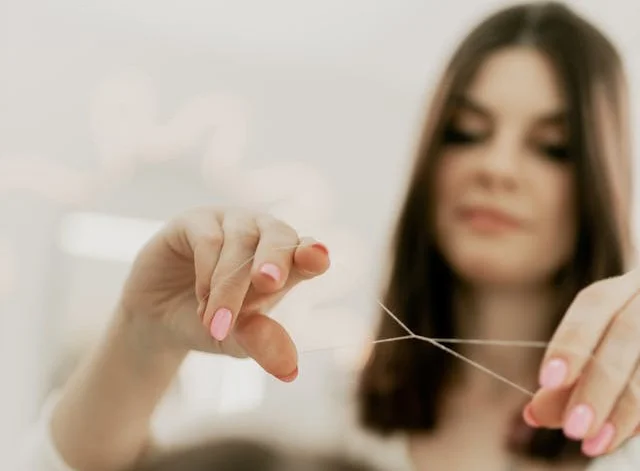
Facial threading is a precise hair-removal method that uses twisted cotton thread to lift unwanted hairs from the follicle. It can be used to treat selected areas such as the upper lip, chin, forehead, cheeks, jawline, and sideburns without hot wax, adhesive strips, razors, or depilatory creams.
The technique is especially useful on the face because each area requires a different approach. The upper lip needs controlled movement near the lip border, while the sideburns must be refined without creating an unnaturally sharp transition into the hairline. Cheek and jawline threading also require careful planning so the finished result appears clean rather than over-treated.
Professional facial threading in Los Angeles should be customized according to skin condition, hair density, growth direction, and the specific sections a guest wants treated. Some people need only occasional upper-lip maintenance, while others prefer a more complete facial cleanup before an event, photography session, vacation, or makeup appointment.
At Beverly Microblading Center, facial threading is provided from our Westwood studio for guests from Beverly Hills, Brentwood, Santa Monica, Century City, Bel Air, Culver City, and nearby Los Angeles neighborhoods. Every appointment begins by confirming the treatment areas and preserving natural boundaries around the brows, hairline, and sideburns.
What Is Facial Threading?
Facial threading is a temporary facial hair-removal treatment performed with a thin cotton thread.
The thread is folded and twisted so that its central section can capture unwanted hairs. As the technician moves the thread across the skin, the hairs become trapped in the twist and are pulled from the follicle.
Threading may remove:
- Fine facial hair
- Short visible hairs
- Individual coarse hairs
- Narrow rows of hair
- Hair along carefully planned facial borders
Unlike shaving, threading does not cut the hair at the skin’s surface. Because the captured hairs are removed from the follicle, visible regrowth often takes longer to appear than it does after shaving.
Threading is temporary and does not permanently stop facial hair growth. Maintenance appointments are required as new hairs enter their growth cycle.
What Are Facial Threads?
The phrase “what are facial threads” can cause confusion because it is used online to describe two unrelated services.
In facial hair removal, facial threads refer to the cotton thread used to catch and remove unwanted hair. Nothing is inserted into the skin, and no material remains in the face after the appointment.
In medical aesthetics, facial threads may refer to sutures placed beneath the skin during a thread-lift procedure. That is a completely different treatment performed by qualified medical professionals.
The facial threading Los Angeles service described here is exclusively a surface-level grooming treatment for removing unwanted hair. It does not lift facial tissue, tighten skin, inject products, or place threads under the skin.
Which Areas Can Be Treated With Facial Threading?
Facial threading can be adapted to several areas, but each section requires careful technique.
Upper Lip
Upper-lip threading removes visible hair above and around the lip while preserving the natural lip border.
This area can be sensitive, so the technician works in smaller sections while keeping the skin firm. Mild redness or temporary watering of the eyes may occur.
Chin
The chin may have fine hair, isolated coarse hairs, or a combination of both.
Threading can treat selected growth, although very dense or deeply rooted chin hair may require a different maintenance strategy.
Cheeks
Fine cheek hair can become more noticeable under direct light or makeup.
Cheek threading may help create a smoother-looking surface, but it does not exfoliate the skin or change pore size, acne scars, or texture.
Forehead
Threading can remove fine hair across the forehead or close to the hairline.
The boundary should remain natural. Removing too much near the hairline can create a visible line between treated and untreated areas.
Sideburns
Sideburn threading requires careful planning because the hair should transition softly into the scalp hair.
A professional service should confirm how much hair you want removed before creating a new sideburn length or shape.
Jawline
Selected hair along the jawline may be removed to create a cleaner appearance.
A gradual transition is important, particularly when the hair continues onto the neck.
Brows and Between the Brows
Facial threading may be combined with eyebrow threading when both brow shaping and facial cleanup are required.
The brow shape should still be handled as a separate design area rather than treated as part of general facial hair removal.
How Facial Threading Works
A professional appointment involves more than moving thread across the skin.
Consultation
The technician first confirms which areas you want treated and which hair should remain.
This is especially important around:
- Sideburns
- Hairline
- Brow fronts
- Brow tails
- Jawline
- Temples
You should also disclose recent facial treatments, active skincare products, acne, skin sensitivity, and previous reactions to hair removal.
Skin Assessment
The treatment area is checked for irritation, peeling, sunburn, broken skin, active infection, or inflamed acne lesions.
Threading should not be performed directly over areas where the skin is compromised.
Cleansing
Makeup, sunscreen, oil, and skincare residue are gently removed.
Clean skin allows the thread to grip the hair more effectively and reduces product buildup around the follicles.
Treatment-Area Planning
The technician reviews the direction, density, and natural boundary of the hair.
A full-face service should not create sharp, disconnected sections. The result should transition naturally into areas that are not being threaded.
Skin Positioning
The skin is held firm while the thread moves across it.
Guests may be asked to hold the upper lip, cheek, forehead, or jawline in a certain position to keep the surface taut and reduce unnecessary pinching.
Hair Removal
The cotton thread is twisted and guided over selected hairs.
The technician works gradually and checks the skin throughout the service instead of repeatedly passing over the same sensitive section.
Detailed Refinement
Tweezers may be used for isolated hairs that are too short, slippery, or resistant for the thread to catch safely.
Soothing Care
Loose hair is removed, and a gentle calming product may be applied when appropriate for the guest’s skin.
Facial Threading Before and After
Professional facial threading before and after results usually show a cleaner-looking facial surface with less visible hair.
Before Facial Threading
The face may have:
- Visible upper-lip hair
- Fine cheek hair
- Isolated chin hairs
- Uneven sideburn growth
- Hair around the forehead
- Jawline regrowth
- Makeup catching on fine facial hair
- Different hair density across facial areas
After Facial Threading
The treated sections may appear:
- Cleaner
- Smoother-looking
- More polished
- Better defined around the sideburns
- Less shadowed around the upper lip
- Easier to cover evenly with makeup
- More consistent in photographs and direct lighting
When viewing facial threads before and after images, confirm that the photos relate to facial hair removal rather than a medical thread-lift procedure.
Realistic results depend on the hair’s color, thickness, density, and growth pattern. Very light hair may be difficult to see in photographs even when it has been removed successfully.
How Long Do Facial Threads Last?
The question “how long do facial threads last” usually refers to how long the hair-removal results remain visible.
Facial threading results commonly last approximately two to five weeks. However, the exact timing varies because different facial areas and individual hairs grow at different rates.
Upper-lip or chin hair may become noticeable sooner than fine cheek or forehead hair. Some guests schedule small-area maintenance more frequently while booking a complete facial service less often.
Longevity is affected by:
- Treatment area
- Natural hair-growth speed
- Hair thickness
- Hair density
- Hormonal factors
- Age
- Previous hair-removal method
- Individual follicle cycles
- Home tweezing or shaving
- Preferred level of smoothness
The cotton thread itself is discarded after treatment. No thread remains in the skin or face.
Does Facial Hair Grow Back Thicker After Threading?
Threading does not change the number of hair follicles or turn fine hair into coarse hair.
Hair may sometimes appear more noticeable during regrowth because it becomes visible against smooth skin or because different hairs return at different times.
Unlike shaving, threading does not cut the hair into a blunt surface-level tip. The new hair grows naturally from the follicle.
Changes in facial hair thickness, density, or distribution may be influenced by hormones, age, genetics, medication, or health conditions rather than the threading process.
Sudden or substantial facial hair growth should be discussed with a healthcare professional, particularly when it occurs with irregular periods, severe acne, scalp hair thinning, voice changes, or other new symptoms.
Facial Threading vs Waxing
Threading and waxing both remove facial hair from the follicle, but their techniques differ.
Facial Threading
Threading:
- Uses twisted cotton thread
- Does not require heated wax
- Allows treatment of narrow sections
- Provides control near facial borders
- Does not use adhesive strips
- Can be adjusted for different growth patterns
- May cause temporary redness
Facial Waxing
Waxing:
- Removes wider sections at once
- May be faster for larger areas
- Uses warm or room-temperature wax
- Pulls across the skin surface
- Requires caution with retinoids and exfoliants
- May be unsuitable for compromised skin
- Can create clean results when used correctly
Threading may be preferable when control and gradual hair removal are priorities.
Waxing may be more efficient for broader areas when the skin is healthy and able to tolerate the product.
Facial Threading vs Shaving
Shaving cuts facial hair at the skin’s surface. It is fast and generally painless when performed correctly, but visible regrowth may appear sooner.
Threading removes the selected hairs from the follicle, so the treated area may remain smoother-looking for longer.
Threading May Be Better When You Want:
- Longer-lasting temporary removal
- More control around sideburns and hairlines
- Removal without a blade
- Less frequent maintenance
- Selected-area treatment
Shaving May Be Better When You Want:
- Very quick home maintenance
- Painless surface-level removal
- Treatment of a larger area
- No pulling from the follicle
Neither method permanently reduces facial hair.
Facial Threading vs Dermaplaning
Dermaplaning uses a specialized blade to remove surface-level hair and dead skin cells. It is an exfoliating skin procedure as well as a hair-removal service.
Facial threading removes selected hairs from the follicle but does not exfoliate the entire skin surface.
Choose threading when your main goal is targeted, longer-lasting hair removal.
Choose professional dermaplaning when surface exfoliation and removal of widespread fine hair are both desired and your skin is suitable for the treatment.
The two services should not be performed too close together without professional guidance because the skin may become overworked.
Facial Threading vs Tweezing
Tweezing removes one hair at a time and is useful for isolated chin, lip, or jawline hairs.
Threading can remove several fine hairs more efficiently while still allowing controlled treatment.
Tweezing may be enough for one or two hairs. Threading may provide better value when a complete section requires maintenance.
Repeatedly tweezing irritated skin or digging for hairs below the surface can increase inflammation and should be avoided.
Does Facial Threading Hurt?
Threading may cause brief pulling, pinching, or stinging sensations.
Discomfort varies according to:
- Treatment area
- Hair thickness
- Hair density
- Skin sensitivity
- Amount of regrowth
- Recent exfoliation
- Hormonal changes
- Personal tolerance
- Technician technique
The upper lip is often more sensitive than the cheeks or forehead.
Discomfort generally stops once the threading is complete. Mild redness, warmth, or raised follicles may remain temporarily.
Facial Threading Aftercare
Freshly threaded skin should be treated gently while temporary sensitivity settles.
For the first 12–24 hours, avoid:
- Touching or rubbing the treated areas
- Heavy foundation or concealer
- Intense exercise
- Excessive sweating
- Swimming
- Saunas and steam rooms
- Very hot showers
- Fragranced skincare
- Alcohol-heavy toners
- Facial scrubs
- Retinoids
- Exfoliating acids
- Self-tanning products
- Picking at raised follicles
After the initial waiting period, cleanse gently, pat the skin dry, and use products appropriate for your skin type.
Keep makeup tools clean and reintroduce active skincare gradually if the area feels calm.
Protect the skin from excessive sun exposure. Seek professional guidance if redness, bumps, itching, or swelling persist longer than expected.
Severe pain, spreading redness, discharge, blistering, or signs of infection require medical evaluation.
Common Facial Threading Concerns and Solutions
Redness After Threading
Temporary redness is common because hairs have been removed from the follicles.
Avoid touching, heat, makeup, sweating, and strong skincare until the area settles.
Small Bumps Appeared
Raised follicles can occur after facial hair removal.
Keep the area clean, avoid heavy products, and do not squeeze or scratch the bumps. Persistent or worsening bumps should be assessed.
Some Hairs Were Missed
Very short hairs may be difficult for the thread to capture.
Contact the studio if a clearly visible area was overlooked. Avoid repeated home threading or aggressive tweezing while the skin is still sensitive.
Regrowth Appeared Unevenly
Facial hairs grow through different stages, so they do not all return at the same time.
Regular appointments can gradually create a more predictable maintenance pattern, although perfectly synchronized growth cannot be guaranteed.
The Sideburn Line Looks Too Sharp
Sideburn threading should normally create a soft transition.
Avoid removing additional hair at home. Allow some growth to return, and request a more gradual border during your next appointment.
The Skin Feels Dry
Strong skincare, repeated threading passes, or pre-existing dryness may contribute to temporary tightness.
Use gentle, fragrance-free skincare suited to your skin and postpone active exfoliation until the area is comfortable.
Hair Returns Quickly
Some areas naturally grow faster than others.
Upper-lip or chin maintenance may be scheduled more often than forehead or cheek threading.
Facial Threading Cost
The cost of facial threading varies according to:
- Number of areas treated
- Hair density
- Appointment duration
- Technician experience
- Studio location
- Makeup removal
- Additional tweezing
- Full-face or individual-area booking
- Aftercare support
An upper-lip appointment may be priced differently from a multi-area or full-face treatment.
When comparing services, confirm whether the price includes the specific areas you need. “Full face” may have different definitions between studios and may not automatically include brows, neck, or hairline work.
The lowest price does not always offer the best value. Over-removing sideburns, repeatedly passing over sensitive skin, or creating unnatural borders may require weeks of regrowth.
Who Is a Good Candidate?
Facial threading may suit people who:
- Want temporary facial hair removal
- Prefer not to use wax
- Have visible upper-lip hair
- Want isolated chin hairs removed
- Need cleaner sideburns
- Have fine cheek or forehead hair
- Want smoother-looking makeup application
- Prefer targeted treatment
- Want results lasting longer than shaving
- Can follow aftercare instructions
Century City professionals may choose efficient upper-lip or chin appointments between work commitments. Beverly Hills and Bel Air guests may book multi-area facial cleanup before special occasions. Brentwood, Santa Monica, Culver City, and Westwood visitors may select maintenance based on their individual growth patterns.
Who Should Postpone Facial Threading?
Threading should generally be postponed over areas with:
- Open cuts or sores
- Active infection
- Cold sores near the treatment area
- Sunburn
- Significant peeling
- Active eczema or dermatitis
- Inflamed psoriasis
- Painful cystic acne
- Broken acne lesions
- Unexplained rash or swelling
- Recent facial surgery
- Fragile or easily bleeding skin
- Recent laser resurfacing
- Recent chemical peeling
- Unhealed cosmetic tattooing
Disclose recent use of retinoids, exfoliating acids, acne treatments, scrubs, peels, and resurfacing procedures.
Threading does not remove a layer of skin like waxing may, but repeated contact can still irritate compromised or highly sensitized skin.
Frequently Asked Questions
What Is Facial Threading?
Facial threading is a temporary hair-removal treatment that uses twisted cotton thread to capture unwanted facial hairs and remove them from the follicle.
What Are Facial Threads?
For hair removal, facial threads refer to the cotton thread used during the service. The term can also refer to medical thread lifts, which are completely different procedures.
How Long Do Facial Threads Last?
Facial threading results generally last approximately two to five weeks. Longevity depends on the treatment area, hair thickness, growth rate, hormones, and maintenance habits.
What Do Facial Threading Before and After Results Show?
Results usually show less visible facial hair, cleaner sideburns, a smoother-looking upper-lip area, and a more polished surface under makeup.
Are Facial Threads Before and After Photos Always About Hair Removal?
No. Some online photos using that phrase show medical thread-lift procedures. Hair-removal threading does not insert anything beneath the skin.
Does Facial Threading Make Hair Grow Back Thicker?
No. Threading does not increase the number of follicles or permanently change fine hair into coarse hair.
Is Facial Threading Better Than Waxing?
Threading provides controlled hair removal without wax or adhesive strips. Waxing may be faster for larger areas. Suitability depends on skin condition, hair density, and personal preference.
Can I Wear Makeup After Facial Threading?
Wait approximately 12–24 hours, or until redness and sensitivity have settled, before applying heavy makeup over freshly threaded skin.
How Often Should I Book Facial Threading?
Many guests schedule treatment every two to five weeks. Upper-lip and chin appointments may be needed more frequently than cheek or forehead maintenance.
Where Can I Book Facial Threading in Los Angeles?
Beverly Microblading Center provides personalized facial threading in Los Angeles from our Westwood studio, serving Beverly Hills, Brentwood, Santa Monica, Century City, Bel Air, Culver City, and nearby neighborhoods.
Enjoy Precise Facial Hair Removal Without Wax
Professional facial threading Los Angeles services can remove unwanted hair while preserving natural borders around your brows, sideburns, and hairline.
Book your Westwood appointment for customized treatment areas, careful technique, and a maintenance plan designed around your skin and hair-growth pattern.
Book Your Free Consultation
Get expert advice and a personalized treatment plan—no commitment required