
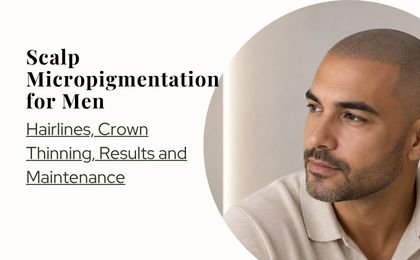
Scalp Micropigmentation for Men: A Modern Approach to Hair-Loss Camouflage
A receding hairline, thinning crown, or increasingly visible scalp can change the overall appearance of a man’s hairstyle long before complete baldness develops. Some men choose medication or hair transplantation, while others prefer to shave their hair closely. Scalp micropigmentation for men offers another option: creating the visual appearance of closely cropped follicles or reducing the contrast between existing hair and visible scalp.
Rather than growing new hair, scalp micropigmentation uses carefully placed pigment impressions to camouflage areas affected by hair loss. Published medical literature describes SMP as a cosmetic technique for disguising alopecia and visible scalp by creating follicle-like pigmentation. More recent research continues to report its use for selected forms of alopecia, while noting that long-term standardized evidence remains limited.
For men considering scalp micropigmentation in Los Angeles, treatment should be customized to the actual hair-loss pattern rather than built around a standard hairline template. A client with early temple recession needs a very different plan from someone with advanced crown loss or a completely shaved scalp.
Our Westwood location is convenient for clients from Beverly Hills, Brentwood, Santa Monica, Century City, Bel Air, Culver City, and nearby Los Angeles neighborhoods seeking a personalized approach to hairline design, density camouflage, SMP maintenance, and long-term planning.
What Is Scalp Micropigmentation for Men?
What is scalp micropigmentation? SMP is a form of cosmetic tattooing in which pigment is placed into the scalp using needles to create small marks designed to resemble follicles or visually reduce scalp contrast.
Los Angeles County classifies micropigmentation as permanent cosmetics and body art. Under current County requirements, body-art practitioners must register and facilities performing body art must hold the appropriate Public Health permit or license.
For men, SMP is most commonly used in two visual styles.
The first is the shaved-head effect. Pigment impressions are distributed across areas of hair loss so the scalp resembles a head of hair that has been clipped extremely short.
The second is density treatment. When natural hair remains but thinning makes the scalp visible, pigment is placed between existing hairs to reduce the contrast between hair and skin.
Neither approach creates actual follicles. SMP is cosmetic camouflage rather than hair restoration.
Why Men Choose Scalp Micropigmentation
Hair loss does not affect every man in the same way. Some are mainly concerned about their temples. Others retain a strong front hairline but lose density at the crown. Still others have diffuse thinning that makes the entire scalp appear lighter in photographs or bright lighting.
One of the main benefits of scalp micropigmentation is that treatment can be designed around these different patterns.
For a closely shaved style, SMP can visually reconnect a receding hairline with areas of existing follicles. For thinning hair, it can make the scalp less visually prominent. It may also be used to camouflage selected scars or areas of stable alopecia. Published SMP research has described its application across several hair-loss patterns, although outcomes depend strongly on technique and appropriate patient selection.
Scalp Micropigmentation for a Receding Hairline
Hairline design is one of the most important parts of scalp micropigmentation men treatments.
A hairline that is too low, too straight, too dark, or too symmetrical may look artificial even when the individual pigment impressions are technically well applied.
Natural-looking design considers forehead height, facial proportions, temple recession, age, existing hair pattern, and the likelihood that hair loss will continue.
For many men, a slightly mature hairline is more believable than recreating the hairline they had in their late teens.
Soft Hairline vs Defined Hairline
A softer SMP hairline uses gradual density and subtle irregularity near the forehead. It can work well for men who want a natural transition that does not immediately attract attention.
A more defined hairline creates a stronger boundary. Some clients prefer this style, particularly when they keep the scalp closely shaved, but excessive definition can become obvious at conversational distance.
The best scalp micropigmentation design should therefore reflect the person’s appearance and preferences rather than a one-style-fits-all aesthetic.
Scalp Micropigmentation for Crown Thinning
The crown requires a different approach from the frontal hairline.
Crown thinning often develops gradually and may remain unnoticed until photographs or overhead lighting reveal increasing scalp visibility. When natural hair is still present, scalp pigmentation can sometimes be placed between the hairs to reduce this contrast.
The treatment needs to blend beyond the most obvious thinning area. Concentrating pigment only in the central bald spot can create a visible boundary between treated and untreated scalp.
Progressive hair loss is also an important consideration. If the surrounding natural hair continues to thin after SMP, additional scalp areas can become visible later. This does not necessarily mean that the original SMP failed; it may mean that the underlying hair-loss pattern changed.
SMP for Diffuse Thinning
Diffuse thinning differs from a completely bald scalp because natural hairs remain throughout the treatment area.
In this situation, hair scalp micropigmentation is generally intended to create the illusion of greater density rather than replicate a fully shaved scalp.
Pigment color and density must coordinate with the remaining hair. Too much pigment can create an unnatural solid appearance, while too little may not reduce scalp visibility enough.
Diffuse treatment can be especially useful for clients who notice thinning primarily under bright office lighting, photography, or outdoor sunlight.
For Century City professionals or clients from Beverly Hills and Brentwood who want a discreet cosmetic improvement without dramatically changing their hairstyle, density-focused SMP may be worth discussing during consultation.
SMP for a Completely Shaved Look
Men with advanced hair loss may choose to shave the remaining hair and use SMP across a larger portion of the scalp.
The objective is to reproduce the visual texture of follicles rather than create the appearance of longer hair.
This style requires careful blending with real follicles around the sides and back of the head.
Dot size, spacing, pigment tone, and hairline design all matter. If the impressions are excessively large or uniform, they can resemble tattoo dots rather than follicles.
A strong result should continue to look natural when the remaining hair is freshly shaved.
How Does Scalp Micropigmentation Work?
The scalp micropigmentation process is usually built progressively.
During consultation, the practitioner examines the hair-loss pattern, existing follicles, scalp color, hair color, previous procedures, scars, and desired hairline. If hair loss is unexplained, rapidly progressing, inflamed, or associated with other scalp symptoms, cosmetic camouflage should not substitute for medical evaluation.
The proposed treatment zones and hairline are then mapped. Pigment selection follows, with the goal of creating a healed appearance that integrates with the existing hair rather than simply matching the darkest visible strand.
During treatment, pigment is deposited through repeated controlled needle placements. SMP literature emphasizes technical factors such as pigment selection, needle technique, dot distribution, and depth as important contributors to natural-looking outcomes.
Treatment is generally approached in stages so the practitioner can evaluate how the previous session heals before building additional density.
Why Multiple SMP Sessions Can Be Better Than One Heavy Session
A common temptation is to make the scalp look fully dense during the first appointment.
That approach can create problems because freshly treated pigment often looks stronger than healed pigment. Building density conservatively allows the practitioner to see how the scalp responds before making the result darker.
A staged scalp micropigmentation process also allows adjustments to the hairline, crown transition, pigment intensity, and lighter areas.
The goal should be controlled layering rather than creating a dark, flat appearance immediately.
What Do Scalp Micropigmentation Results Look Like?
Scalp micropigmentation results vary according to the hair-loss pattern and treatment goal.
For shaved styles, the result should resemble the appearance of closely clipped follicles.
For density treatments, the scalp should appear less noticeable through the hair.
The best result should not look like painted hair. SMP cannot create actual strands, movement, texture, or length.
Research on SMP has reported favorable aesthetic outcomes in selected patients, but current literature also notes that protocols and long-term outcome data are not yet fully standardized.
Before and After Scalp Micropigmentation: How to Judge a Portfolio
Before and after scalp micropigmentation images are among the most useful tools when comparing practitioners, but they should be examined critically.
Fresh SMP often appears darker because of immediate pigment intensity and skin redness. A dramatic same-day transformation does not necessarily demonstrate how the result will look months later.
When evaluating scalp micropigmentation before after photos, look for healed work, similar lighting, comparable hair length, close-up hairlines, crown views, and examples with hair-loss patterns similar to yours.
Also examine whether the hairline looks believable from the front and temples.
A high-quality portfolio should include more than one ideal camera angle.
Scalp Micropigmentation vs Hair Transplant for Men
SMP and hair transplantation are not competing versions of the same treatment.
They produce fundamentally different outcomes.
| Scalp Micropigmentation | Hair Transplant |
|---|---|
| Creates visual follicle camouflage | Relocates real hair follicles |
| Does not grow hair | Transplanted follicles can grow hair |
| Useful for shaved effect or density illusion | Designed to restore actual hair in selected areas |
| No donor-hair requirement for pigmentation | Requires adequate donor follicles |
| Pigment may fade and require maintenance | Hair result depends on transplant survival and future hair loss |
| Can camouflage selected transplant scars | May itself create donor or recipient-area scars |
For some men, the two treatments can complement each other. SMP may be used after transplantation when the scalp remains visible between transplanted hairs or a donor scar remains noticeable.
Scalp Micropigmentation vs Hair Fibers
Hair fibers and scalp concealers can reduce scalp visibility without tattooing.
Their main advantage is reversibility. They can be washed off, changed, or discontinued.
SMP offers much longer-lasting camouflage, but this also means the decision deserves more consideration. Tattoo pigment is difficult to remove completely, and FDA warns that tattoo removal may require multiple treatments, may be expensive, and cannot always eliminate pigment without visible effects.
For someone who changes hairstyles frequently or is uncertain about the desired hairline, temporary camouflage may initially offer more flexibility.
Is Scalp Micropigmentation Permanent?
Is scalp micropigmentation permanent? The most accurate answer is that SMP is a long-lasting form of cosmetic tattooing, but the visible result can change and fade.
Los Angeles County defines micropigmentation as permanent cosmetics involving pigment placed into human skin tissue.
FDA likewise treats permanent makeup as tattooing and emphasizes that tattoo pigments are designed to remain in the skin and can be difficult to remove.
At the same time, SMP appearance may soften with time. Sun exposure, pigment characteristics, treatment depth, skin response, and future hair loss can all influence how the result looks years later.
It is therefore better to think of SMP as long-lasting but maintainable, not as something guaranteed to look identical forever.
How Long Does Scalp Micropigmentation Last?
There is no responsible way to promise the exact same lifespan for every client.
When people ask how long does scalp micropigmentation last, they are often asking how long it will look strong enough before maintenance is desired.
Longevity varies according to pigment, technique, skin characteristics, UV exposure, scalp care, lifestyle, and natural changes in hair loss.
Recent clinical literature continues to note limitations in standardized long-term SMP data.
Rather than relying on a fixed marketing claim, ask the practitioner how they assess fading, what touch-ups involve, and how they manage future hair loss.
Scalp Micropigmentation Aftercare
Good scalp micropigmentation aftercare is important because tattooing creates numerous small skin penetrations.
Your practitioner’s instructions should always take priority.
During early healing, the scalp generally needs to be protected from unnecessary friction, scratching, prolonged soaking, swimming, intense sweating, and products that could irritate freshly treated skin.
Sun protection becomes particularly important after the scalp has healed, especially for men wearing a shaved style with little natural hair covering the treated area.
Tattooing carries risks including infection, allergic reactions, granulomas, keloid formation, and problems related to unwanted or migrating pigment. FDA has also documented infections linked to contaminated tattoo inks, including contamination in sealed products.
Contact the practitioner or an appropriate healthcare professional if you develop progressively worsening redness, pain, swelling, drainage, fever, or another unexpected reaction.
Scalp Micropigmentation Cost for Men
Scalp micropigmentation cost is usually based more on the treatment area and complexity than on gender.
A man requiring limited temple work will generally need less coverage than someone seeking a reconstructed hairline, crown treatment, and full top-of-scalp pigmentation.
Your micropigmentation price may therefore depend on the amount of coverage, number of sessions, density required, scar camouflage, previous SMP, hairline complexity, and whether corrective work is necessary.
A personalized consultation is more meaningful than a generic advertised starting price.
When comparing best scalp micropigmentation Los Angeles providers, consider the total proposed treatment plan rather than only the cost of one session.
Who Should Postpone SMP?
SMP should generally be delayed when the scalp is actively infected, wounded, severely sunburned, or experiencing an uncontrolled inflammatory flare.
People with significant healing problems, immune suppression, bleeding conditions, medication affecting bleeding, or a strong history of abnormal scarring should disclose these issues before treatment.
FDA notes that tattooing can result in infections, allergic reactions, granulomas, and keloids, particularly in people prone to abnormal scar formation.
Unexplained hair loss also deserves medical evaluation first. SMP can camouflage an appearance, but it cannot diagnose why the hair is disappearing.
Common SMP Problems and Practical Solutions
My Hairline Looks Too Sharp in Examples I’ve Seen
Request a softer, age-appropriate design with gradual edge density. Review healed examples rather than only fresh photographs.
My Crown Is Thinning but I Don’t Want to Shave My Head
Ask about density-focused SMP. In selected clients, pigment can be placed between existing hairs to reduce scalp contrast without creating a full shaved effect.
I Already Had a Hair Transplant but My Scalp Is Still Visible
SMP may sometimes be used to complement transplant results by reducing contrast between the remaining scalp and existing or transplanted hairs.
I’m Worried SMP Will Turn Into a Solid Tattoo
Choose a practitioner whose healed portfolio demonstrates individual follicle-like impressions and natural transitions. Technique, depth, pigment behavior, and density all influence long-term appearance.
I’m Losing More Hair After SMP
SMP does not stop future hair loss. A medical professional can evaluate progression, while the SMP practitioner can later assess whether additional camouflage is appropriate.
Choosing the Best Scalp Micropigmentation in Los Angeles
The best scalp micropigmentation practitioner should be judged by more than social-media photographs.
In Los Angeles County, micropigmentation falls under permanent cosmetics/body art. Practitioners are required to register with the County, and body-art facilities generally require the appropriate Public Health permit or license. The County’s regulation system is intended in part to reduce cross-contamination and bloodborne-disease risks.
Before booking scalp micropigmentation Los Angeles services, ask about practitioner registration, facility permitting, infection-control practices, pigment handling, healed results, treatment planning, aftercare, maintenance, and what happens if you are dissatisfied.
FDA also advises consumers considering tattooing to pay attention to sanitary practices and the risks associated with contaminated inks.
Frequently Asked Questions
What Is Scalp Micropigmentation for Men?
Scalp micropigmentation for men is a cosmetic tattoo technique used to create the appearance of closely cropped follicles or reduce visible scalp in thinning areas. It does not create new hair.
How Does Scalp Micropigmentation Work?
Pigment is deposited through controlled needle placements across selected areas of the scalp. The practitioner adjusts dot size, distribution, density, and pigment tone to visually integrate the treatment with natural follicles.
Can SMP Fix a Receding Hairline?
SMP can visually redefine a receding hairline by extending follicle-like pigmentation into areas of hair loss. The hairline should be designed according to facial proportions, age, existing hair, and expected future hair loss.
Can Scalp Micropigmentation Help Crown Thinning?
Yes, selected men with remaining crown hair may use SMP to reduce the visual contrast between the scalp and existing hair. It does not increase actual hair density.
Is Scalp Micropigmentation Permanent?
SMP is a long-lasting cosmetic tattoo. Pigment remains in the skin, but its visible appearance can fade or change, so maintenance may eventually be desired.
How Long Does Scalp Micropigmentation Last?
Longevity varies according to technique, pigment, skin, sun exposure, scalp care, and future hair loss. Current research does not support guaranteeing one exact duration for every client.
What Should I Look for in Scalp Micropigmentation Before and After Photos?
Review healed scalp micropigmentation before and after photographs with similar lighting, hair length, and camera angles. Look closely at hairlines, temples, crown blending, and results on people with a hair-loss pattern similar to yours.
How Much Does Scalp Micropigmentation Cost?
Scalp micropigmentation cost varies with treatment area, number of sessions, hairline design, crown coverage, scar camouflage, and corrective work. A consultation is needed for an accurate micropigmentation price.
Is Scalp Micropigmentation Better Than a Hair Transplant?
Neither is universally better. SMP provides visual camouflage but no new hair, while transplantation moves real follicles. The right option depends on donor hair, desired hairstyle, budget, medical suitability, and expectations.
Where Can I Get Scalp Micropigmentation in Los Angeles?
A Westwood consultation is convenient for clients from Beverly Hills, Brentwood, Santa Monica, Century City, Bel Air, Culver City, and nearby neighborhoods. When comparing providers for scalp micropigmentation in Los Angeles, verify County practitioner registration and facility permitting in addition to reviewing healed results.
Create a Hairline That Fits You
A successful SMP result is not about making the scalp as dark or the hairline as sharp as possible. It is about creating believable follicle-like detail that complements your face, existing hair, skin tone, and long-term hair-loss pattern.
Book a personalized Westwood consultation to discuss scalp micropigmentation for men, hairline design, crown thinning, treatment sessions, healed results, aftercare, maintenance, and your individual scalp micropigmentation cost.
Book Your Free Consultation
Get expert advice and a personalized treatment plan—no commitment required