
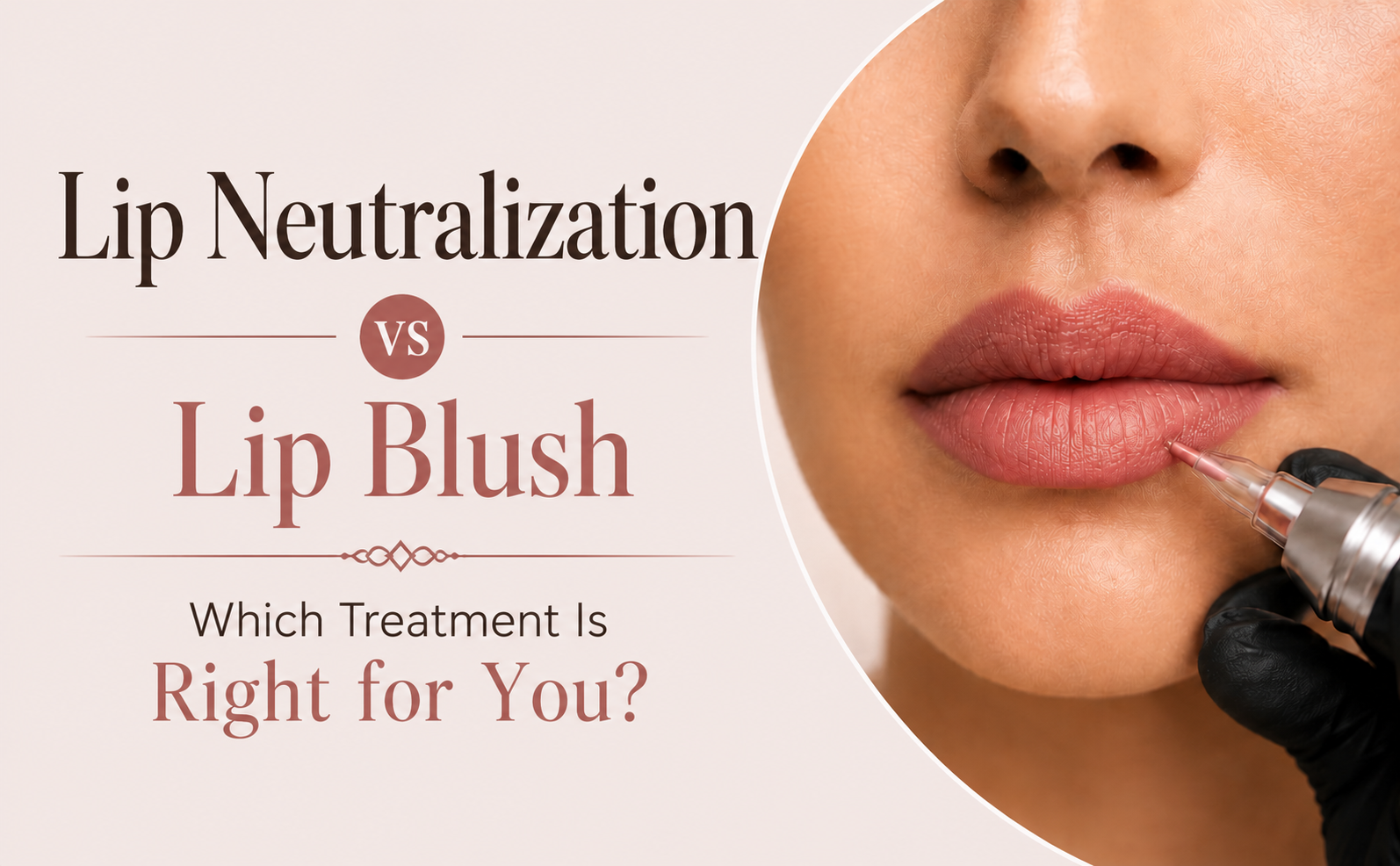
Lip neutralization and lip blush are both cosmetic tattoo treatments designed to improve the appearance of the lips. However, they do not begin with the same goal, use the same pigment strategy, or follow the same treatment plan.
A client with pale, evenly toned lips may be ready for lip blush immediately. Someone with cool, purple, gray, brown, or uneven pigmentation may need dark lip neutralization before a desired pink, rose, peach, or nude shade can be introduced.
This distinction is important because choosing the wrong procedure can lead to unrealistic expectations or an unpredictable healed color.
When comparing lip neutralization vs lip blush, think of neutralization as corrective color work and lip blush as cosmetic color enhancement. In some cases, the two treatments are separate options. In others, neutralization is the first stage of a longer lip blush plan.
At Beverly Microblading Center, every treatment begins with an individual lip assessment. Clients seeking lip neutralization in Los Angeles visit our Westwood studio from Beverly Hills, Brentwood, Santa Monica, Century City, Bel Air, Culver City, and nearby neighborhoods for customized pigment planning and realistic treatment recommendations.
This guide explains how both procedures work, who they are for, how the healing process differs, what affects cost, and how to decide which option is appropriate for your natural lips.
What Is Lip Neutralization?
Clients often ask, “What is lip neutralization?”
Lip neutralization is a specialized cosmetic tattoo technique that uses corrective pigments to balance the appearance of cool, dark, gray, purple, blue, brown, or uneven natural lip pigmentation.
The artist first identifies the dominant undertones within the lips. A customized lip neutralizer is then selected to counteract those tones.
Corrective pigment families may include:
- Peach
- Orange
- Coral
- Warm red
- Terracotta
- Warm pink
These shades may look much brighter than the client’s intended final color. That is because the first goal is not always to create pink or nude lips. It is to warm and balance the natural base.
Once the lips have healed, the artist evaluates how much correction occurred. Another neutralization session may be required before a final cosmetic shade can be added.
The terms lips neutralization, dark lip correction, and dark lip tattoo correction are often used to describe this process.
What Is Lip Blush?
Lip blush is a semi-permanent cosmetic tattoo treatment that adds a customized wash of color to lips that already have a suitable base tone.
The treatment may improve the appearance of:
- Pale lips
- Faded natural color
- Uneven but not strongly cool pigmentation
- A poorly defined border
- Minor visible asymmetry
- Lips that require daily tint or liner
Lip blush pigments may include soft pink, rose, peach, coral, nude, mauve, berry, or brown-pink shades.
The finished result is generally translucent rather than opaque. Lip blush is not intended to look like thick lipstick. It creates a long-lasting base color that can still be covered with gloss, liner, stain, or lipstick after healing.
The Main Difference Between Lip Neutralization and Lip Blush
The main difference is the treatment objective.
Lip Neutralization Corrects the Base
Neutralization is intended for lips with strong cool, dark, or uneven undertones. Corrective pigments are selected according to the natural color that needs balancing.
Lip Blush Adds a Desired Shade
Lip blush is intended for lips that already have a suitable base tone. The artist selects a pigment based mainly on the client’s desired cosmetic result.
When comparing lip blush vs lip neutralization, the question is not simply, “Which color do you like?” The first question is, “What natural undertones are already present?”
Lip Neutralization vs Lip Blush at a Glance
Treatment Goal
Lip neutralization focuses on color correction.
Lip blush focuses on color enhancement.
Starting Lip Tone
Neutralization is more appropriate for dark, cool, gray, purple, brown, or significantly uneven lips.
Lip blush is more appropriate for pale, faded, or evenly toned lips.
Pigment Choice
Neutralization often begins with warm peach, orange, coral, terracotta, or red-based pigments.
Lip blush may use pink, rose, nude, peach, berry, coral, or mauve shades based on the client’s preferred result.
Number of Sessions
Neutralization often requires multiple corrective appointments.
Standard lip blush may require an initial treatment and one perfecting session, although some clients need additional work.
Final Result
Neutralization creates a warmer, more balanced base.
Lip blush creates a visible cosmetic tint.
Who Should Choose Lip Neutralization?
Lip neutralization may be the better option if you have:
- A darker upper lip
- Purple, gray, blue, or cool undertones
- Brown pigmentation around the border
- Uneven patches
- Previous lip tattoo pigment that healed too cool
- Difficulty covering your natural lip tone with makeup
- A desire for a warmer, more balanced foundation
- A planned lip blush color that cannot be applied safely over the current base
A client from Beverly Hills may want a refined rose shade, but if the natural lips have strong purple undertones, correction may be needed first. A Century City professional may want to reduce daily use of concealer and liner, while a Santa Monica client may prefer a balanced base that looks natural without makeup.
The correct plan depends on the lips, not the neighborhood or trend.
Who Should Choose Lip Blush?
Lip blush may be more suitable if you:
- Have naturally pale lips
- Have faded lip color
- Want a soft pink, nude, peach, rose, or coral tint
- Have a generally even natural base
- Want improved border definition
- Regularly use lip tint or liner
- Prefer low-maintenance cosmetic color
- Want a subtle result rather than opaque lipstick
Clients in Westwood and Brentwood often choose lip blush to simplify daily makeup. Those visiting from Bel Air or Culver City may prefer a customized natural shade that remains polished but understated.
Can Lip Neutralization and Lip Blush Be Combined?
Yes. For many clients, neutralization and lip blush are two stages of the same long-term treatment plan.
A typical sequence may include:
- Initial corrective neutralization
- Complete healing period
- Healed-color assessment
- Additional neutralization if needed
- Target lip blush color
- Perfecting touch-up
Not every client follows this exact sequence. Some may need only one corrective session before the target color. Others may require several neutralization appointments.
The artist should not promise a final pink, nude, or rose shade until the healed base has been evaluated.
How the Pigment Strategy Differs
Pigment selection is one of the most important differences between the two treatments.
Lip Neutralization Pigments
A corrective pigment is chosen according to the existing undertone.
For example:
- Blue or purple lips may require peach or orange warmth
- Gray lips may respond to warm coral or red-based correction
- Brown or muted lips may require a custom warm blend
- Uneven lips may need different saturation in different areas
The first color may not resemble the client’s final preference.
Lip Blush Pigments
A lip blush pigment is selected according to:
- Natural lip tone
- Skin undertone
- Preferred color family
- Desired saturation
- Everyday makeup style
- How the pigment is expected to heal
A professional artist may blend several colors to create a personalized result.
Lip Neutralization Before and After
A lip neutralization before and after transformation develops gradually.
Before treatment, the lips may look:
- Purple or gray
- Darker around the border
- Uneven between the upper and lower lip
- Patchy
- Difficult to balance with makeup
After a completed treatment series, the lips may appear:
- Warmer
- Softer
- More even
- More consistent between the upper and lower lip
- Better prepared for a target shade
- Less dependent on corrective cosmetics
When reviewing a lip neutralizer before and after portfolio, look for fully healed results rather than only fresh images.
Fresh neutralization may look intensely orange, coral, peach, or red. The healed result is normally softer.
Lip Blush Before and After
Before lip blush, the lips may appear:
- Pale
- Faded
- Dull
- Poorly defined
- Uneven in light areas
- Dependent on daily tint
After healing, the lips may look:
- Naturally tinted
- More defined
- Fresher
- More balanced
- Easier to enhance with gloss or lipstick
A fresh lip blush result is also brighter than the healed color, but the pigment is usually selected closer to the client’s desired final shade than a neutralization pigment.
Lip Neutralization Healing Process
The lip neutralization healing process occurs gradually because the corrective pigment must settle and interact with the natural lip tone.
Days 1–2 — Bright, Warm Color
The lips may look peach, orange, coral, or red. Mild swelling, tenderness, tightness, or sensitivity can occur.
The fresh warmth is intentional and does not represent the final result.
Days 3–5 — Dryness and Flaking
Light peeling may begin. The pigment can appear patchy as different areas heal at different rates.
Do not pull, peel, bite, or scrub the lips.
Days 5–10 — Temporary Fading
The pigment may look very light or appear to disappear after peeling.
Fresh skin can temporarily reduce pigment visibility while healing continues.
Weeks 2–4 — Corrective Color Settles
The warmth begins to soften and blend with the natural lips. Cool or dark areas may look more balanced.
Weeks 4–8 — Healed Evaluation
The artist evaluates pigment retention, remaining undertones, and whether another correction session is needed.
A detailed consultation helps you understand each stage before treatment and creates a realistic plan for your final lip color.
Lip Blush Healing Process
Lip blush follows a similar visible timeline, but the goal is different.
Days 1–2
The selected color appears brighter and more saturated than expected.
Days 3–5
Dryness and light peeling may occur.
Days 5–10
The color may appear lighter after the surface skin sheds.
Weeks 2–4
The pigment becomes more visible and blends with the natural lip tone.
Weeks 4–6
The final cosmetic shade can be evaluated more accurately.
Both procedures require patience. The lips should not be judged during the early peeling or temporary fading stage.
Aftercare Comparison
Aftercare is generally similar for both lip neutralization and lip blush.
During active healing:
- Keep the lips clean as directed
- Use only approved aftercare products
- Avoid picking, peeling, or biting
- Avoid lipstick, gloss, liner, and stain
- Avoid swimming pools, hot tubs, saunas, and steam
- Minimize sun exposure
- Avoid aggressive lip scrubs
- Keep strong skincare ingredients away from the mouth
- Avoid sharing utensils or lip products
- Avoid foods that cause significant irritation
A neutral lip liner or neutral lip stain should not be applied until the skin has fully healed.
Contact your artist and seek appropriate medical care for severe or worsening pain, significant swelling, spreading redness, pus, fever, extensive blistering, or breathing difficulty.
Touch-Ups and Additional Sessions
Lip Neutralization Touch-Ups
The first healed-color assessment is commonly scheduled approximately six to eight weeks after treatment.
The artist evaluates:
- Remaining cool undertones
- Pigment retention
- Upper and lower lip balance
- Border consistency
- Whether the corrective formula should be adjusted
Clients with deep pigmentation may need another full neutralization session rather than a minor touch-up.
Lip Blush Touch-Ups
A lip blush perfecting session is also commonly scheduled around six to eight weeks after the first appointment.
The artist may:
- Reinforce lighter areas
- Improve color consistency
- Refine the border
- Adjust saturation
- Balance minor asymmetry
Maintenance
Both treatments gradually fade. Maintenance sessions can refresh color and definition after the desired result has been achieved.
Which Treatment Takes Longer?
Lip neutralization usually takes longer as a complete treatment plan because it may require several correction sessions.
A standard lip blush may involve:
- One initial appointment
- One perfecting session
Dark lip neutralization may involve:
- One initial correction
- One or more additional neutralization sessions
- A target lip blush session
- A final perfecting appointment
The total timeline includes several healing periods, each lasting multiple weeks.
A gradual approach is safer and more predictable than trying to force the final color in one appointment.
Which Treatment Costs More?
The lip neutralization cost may be higher than standard lip blush when several sessions are required.
Pricing can be influenced by:
- Pigmentation depth
- Difference between the upper and lower lip
- Number of corrective sessions
- Previous permanent makeup
- Scar tissue
- Custom pigment formulation
- Included follow-ups
- Whether a final lip blush session is added
Lip blush cost may depend on:
- Artist experience
- Desired style
- Pigment customization
- Previous lip tattooing
- Whether the touch-up is included
Clients searching for lip neutralization near me should compare the complete treatment plan rather than only the price of one session.
Lip Neutralization vs Neutral Lip Liner
A neutral lip liner provides temporary definition and may help disguise uneven pigmentation.
The best neutral lip liner depends on natural lip tone and skin undertone. Common options include:
- Brown nude
- Pink nude
- Peach nude
- Rose
- Mauve
- Soft berry
The best neutral lip liners can improve daily makeup, but they require repeated application.
Lip neutralization is intended to create a more lasting base. Once healed, liner can still be used for additional definition.
Lip Neutralization vs Neutral Lip Stain
A neutral lip stain provides temporary surface color.
It may be better for someone who:
- Enjoys changing shades regularly
- Does not want a cosmetic tattoo
- Prefers no healing period
- Wants short-term color
Lip neutralization may be better for someone who:
- Corrects the same areas every day
- Wants a warmer natural base
- Understands that several sessions may be needed
- Wants less dependence on temporary products
Choosing Neutral Lip Colors After Correction
Once the natural base has been balanced, possible neutral lip colors may include:
- Warm nude
- Pink nude
- Muted rose
- Peach
- Brown rose
- Soft coral
- Natural berry
- Warm mauve
The ideal neutral lip color depends on the healed base, skin undertone, and personal style.
Neutral lips do not need to look beige or pale. A neutral shade is simply one that harmonizes with the client’s natural coloring without appearing excessively bright or dramatic.
Common Problems and Solutions
My Fresh Neutralization Looks Orange
This is often expected. Warm pigment is used to balance cool undertones. Wait until complete healing before evaluating the color.
My Pigment Disappeared After Peeling
Temporary fading may occur. The color can become more visible as the fresh skin settles.
My Upper Lip Is Still Darker
The upper lip may need another corrective session. Different areas can retain pigment differently.
My Lip Blush Healed Too Cool
A professional assessment is needed. Corrective pigment may be considered, but additional color should not be applied until the lips have fully healed.
I Want a Much Lighter Color
Your natural pigmentation limits how light the result can safely and realistically become. The artist should recommend a balanced shade rather than promise dramatic lightening.
My Lips Look Patchy
Patchiness may occur during healing. Persistent lighter areas can be refined after the full healing period.
Who Should Postpone Either Treatment?
Lip neutralization or lip blush may need to be postponed if you:
- Have an active cold sore
- Have severely cracked, bleeding, or sunburned lips
- Have an active rash, infection, or open wound
- Are pregnant or breastfeeding
- Have uncontrolled diabetes
- Have a bleeding disorder
- Take medications that significantly affect healing
- Recently received lip filler or dental treatment
- Have unexplained pigmentation that requires medical evaluation
- Have a known allergy to treatment materials
Clients with a history of cold sores should disclose this before booking and discuss preventive options with an appropriate healthcare professional.
Choosing the Right Artist in Los Angeles
The artist should have experience with both standard lip blush and dark lip neutralization.
Review:
- Healed results
- Multi-session neutralization cases
- Different natural lip tones
- Customized pigment work
- Sanitation standards
- Aftercare instructions
- Touch-up policies
- Honest explanations of limitations
Clients traveling from Beverly Hills or Bel Air may prefer a refined neutral result. Century City professionals may prioritize convenient scheduling and minimal daily makeup. Santa Monica, Brentwood, and Culver City clients may value a natural base that remains polished during active days.
The treatment should always be based on the client’s actual lips rather than assumptions about style.
Frequently Asked Questions
What is the main difference between lip neutralization and lip blush?
Lip neutralization corrects dark, cool, or uneven undertones. Lip blush adds a desired cosmetic color to lips with a suitable base.
Can I receive lip blush without neutralization?
Possibly. Pale or evenly toned lips may be suitable for standard lip blush. Darker or cooler lips may require neutralization first.
How many neutralization sessions are needed?
Some clients need two sessions, while deeper pigmentation may require three or more corrective appointments.
Does lip neutralization make lips pink?
Not automatically. The initial goal is to create a balanced base. A pink, nude, or rose shade may be added later.
How long does the lip neutralization healing process take?
Surface healing may improve within one week, while the pigment may take four to eight weeks to settle fully.
Which costs more: lip neutralization or lip blush?
Neutralization may cost more overall when several sessions are needed. Pricing depends on pigmentation complexity and the complete treatment plan.
Can I use neutral lip liner after either treatment?
Yes, but only after the lips have completely healed.
What should I look for in before-and-after photos?
Look for fully healed results, multiple sessions, natural borders, even pigment, and examples on lip tones similar to yours.
Can lip neutralization and lip blush be done in one appointment?
Sometimes a suitable target color can be developed within a correction plan, but strong pigmentation often requires separate sessions with healing between them.
Which treatment is right for me?
The correct treatment depends on your natural lip pigmentation. A professional consultation is the safest way to determine whether you need correction, enhancement, or both.
Discover the Right Treatment for Your Natural Lips
Choosing between lip neutralization vs lip blush begins with understanding your natural undertones—not simply selecting a favorite color.
Beverly Microblading Center provides personalized lip assessments, corrective pigment planning, lip blush color selection, detailed aftercare, and staged treatment from our Westwood studio.
We welcome clients from Beverly Hills, Brentwood, Santa Monica, Century City, Bel Air, Culver City, and nearby Los Angeles neighborhoods.
Book your complimentary consultation to determine whether lip neutralization, lip blush, or a customized combination will create the best result for your lips.
Book Your Free Consultation
Get expert advice and a personalized treatment plan—no commitment required