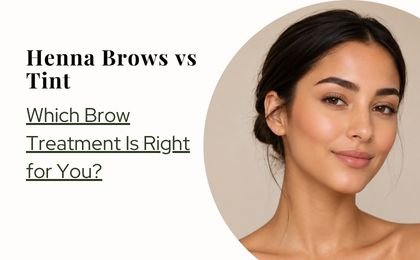
Henna brows and traditional brow tinting can both make natural eyebrow hairs look darker and more defined, but they create different finished results.
Traditional brow tint primarily changes the color of the brow hairs. Henna-style brow products are generally selected when a client wants both deeper hair color and a more visible temporary stain on the skin beneath the brows.
The difference becomes especially important when deciding whether you want a soft, hair-focused enhancement or a more structured, filled-in appearance.
In a henna brows vs tint comparison, neither treatment is automatically better. The right choice depends on your skin type, natural brow density, desired definition, daily makeup routine, sensitivity history, and how long you want the skin effect to remain visible.
At Beverly Microblading Center, professional henna brows in Los Angeles are customized at our Westwood studio. Some Beverly Hills clients prefer a softly defined henna stain, while Century City professionals may choose a stronger mapped shape that reduces morning makeup time. Clients also visit from Brentwood, Santa Monica, Bel Air, Culver City, and nearby neighborhoods for personalized brow tinting, shaping, and color selection.
This guide explains how henna and regular tint differ, what each treatment can achieve, how long results last, and which option may be more suitable for your brows.
What Are Henna Brows?
Henna brows are created with a professional brow-coloring formula that deepens the natural eyebrow hairs while temporarily staining the skin within a mapped brow shape.
The stain can create the appearance of:
- Greater brow fullness
- A cleaner lower outline
- More visible arches
- Stronger brow tails
- Better symmetry
- Softer-looking small gaps
- Less reliance on daily pencil or powder
Henna does not create new brow hair and does not place pigment beneath the skin. The treatment is temporary and gradually fades as the skin is cleansed and renews naturally.
The skin stain is usually most visible immediately after the appointment. It then softens over several days, while the color on the brow hairs may remain noticeable for several weeks.
What Is Brow Henna?
Brow henna is a cosmetic coloring formula developed specifically for eyebrow services.
It should not be confused with traditional body henna. Professional brow products are designed to provide a wider range of brow shades, controlled skin staining, and more predictable development.
A professional brow henna tint may contain plant-derived ingredients as well as cosmetic colorants, stabilizers, or activating ingredients. A product described as natural brow henna is not necessarily chemical-free or allergy-free.
Ingredient sensitivity should be discussed before treatment, especially when there is a history of reactions to:
- Hair dye
- Brow tint
- PPD
- Resorcinol
- Cosmetic colorants
- Plant-based dyes
- Skincare products
A patch test may be recommended, although it cannot guarantee that a reaction will never occur.
What Is Traditional Brow Tint?
Traditional brow tint is a temporary coloring treatment that mainly darkens the natural brow hairs.
It may help reveal:
- Fine hairs
- Blonde hairs
- Gray hairs
- Pale brow tails
- Sun-lightened sections
- Uneven hair color
Brow tint can make the brows appear fuller because previously invisible hairs become easier to see. However, the treatment generally creates less skin staining than henna.
Traditional tint is often a good choice for clients who already have a suitable brow shape and only need deeper hair color.
The Main Difference Between Henna Brows and Tint
The primary difference is the amount and purpose of the skin stain.
Henna Brows
Henna is generally selected when the goal includes:
- Darkening brow hairs
- Temporarily staining the skin
- Creating a more filled-in effect
- Defining the brow outline
- Strengthening the arch and tail
- Reducing daily brow makeup
- Previewing a mapped brow shape
Traditional Brow Tint
Traditional tint is generally selected when the goal includes:
- Darkening natural hairs
- Revealing fine or pale hairs
- Creating subtle definition
- Avoiding a strong skin stain
- Maintaining a softer appearance
- Enhancing an already established shape
In a brow tint vs henna comparison, henna usually provides more visible shape definition, while tint creates a softer hair-focused enhancement.
Henna Brows Before and After
Professional henna brows before and after results often show a more noticeable change than regular tint because both the hairs and skin are affected.
Before Henna Brows
The brows may appear:
- Light
- Uneven
- Weak through the tail
- Sparse between existing hairs
- Less visible without makeup
- Poorly defined through the arch
- Different in shape between both sides
After Henna Brows
The brows may appear:
- Darker
- Fuller-looking
- More structured
- Better mapped
- Stronger through the tail
- Cleaner along the lower border
- More balanced between both sides
The skin stain can temporarily soften the appearance of small spaces, but it cannot replace real hair or create the longevity of permanent makeup.
When reviewing before and after henna brows, compare results on clients with similar brow density and skin type. Oily skin may not hold the same stain intensity or duration as dry or normal skin.
Brow Tint Before and After
Traditional tint creates a different type of transformation.
Before Brow Tint
The brows may contain:
- Blonde hairs
- Gray hairs
- Faded ends
- Fine hairs that are difficult to see
- Uneven natural color
After Brow Tint
The brows may appear:
- Darker
- More visible
- More even in color
- Slightly fuller
- More polished
- Better defined through the tail
The result usually appears softer because the skin beneath the brows is not the main focus.
Which Treatment Looks More Natural?
Both treatments can look natural when the color and shape are customized correctly.
Traditional tint often creates the most subtle result because it mainly affects the brow hairs.
Henna can also look natural when:
- The color matches the client’s features
- The brow front is kept soft
- Development time is controlled
- The shape follows natural hair growth
- The skin stain is not overly dark
- The arch and tail are not excessively sharp
A harsh block-shaped result is not required to achieve henna brows. The application can be adjusted to create a gentle gradient from the front toward the tail.
A Beverly Hills client may choose a light stain with refined definition, while a Culver City client may prefer a stronger, makeup-inspired shape.
Which Treatment Is Better for Sparse Brows?
The answer depends on why the brows appear sparse.
Small Gaps Between Existing Hairs
Henna may be helpful because the temporary skin stain can visually soften small gaps.
Pale or Fine Brow Hairs
Traditional tint may be enough if the brow appears sparse mainly because many hairs are too light to see.
Completely Hairless Areas
Neither henna nor tint creates real hair. Henna may temporarily color the skin, but the stain will not create permanent hair-like detail.
Microblading, nano brows, powder brows, or daily makeup may be more suitable for significant hair loss or missing tails.
Which Treatment Is Better for Oily Skin?
Traditional tint may provide a more predictable result on oily skin because it focuses mainly on coloring the brow hairs.
Henna can still be used on oily skin, but the skin stain generally fades faster.
The skin stain may last approximately two to seven days on oily skin, depending on:
- Natural oil production
- Cleansing routine
- Exercise
- Swimming
- Skincare products
- Exfoliation
- Heat and humidity
- Initial aftercare
The color on the brow hairs may remain visible after the skin stain fades.
A client with oily skin who wants long-lasting hair color but does not require a strong skin effect may prefer traditional tint.
Which Treatment Is Better for Dry or Normal Skin?
Henna often produces a more noticeable skin stain on normal or balanced skin.
However, very dry or flaky skin may also create uneven staining. Color can attach more strongly to dry patches, leading to a patchy or overly dark appearance.
Professional preparation is important. The technician should assess skin texture and avoid applying henna over irritated, peeling, or compromised skin.
Which Treatment Is Better for Light or Gray Brows?
Both henna and traditional tint can darken pale or gray brow hairs.
Traditional tint may be suitable when the main goal is simply to make the hairs more visible.
Henna may be better when the client also wants a temporary skin stain and a more structured brow shape.
Gray hairs can be resistant to color, so full coverage cannot always be guaranteed. The technician may adjust the shade and development time based on the product system and hair condition.
How Long Do Henna Brows Last?
The answer to how long do henna brows last depends on whether you mean the skin stain or the color on the hairs.
The skin stain commonly lasts several days to approximately two weeks.
The hair color may remain visible for approximately four to six weeks.
The result may fade faster because of:
- Oily skin
- Frequent cleansing
- Swimming
- Heavy sweating
- Retinoids
- Glycolic acid
- Salicylic acid
- Facial scrubs
- Oil-based skincare
- Steam
- Sun exposure
The phrase how long does henna brows last is often used to describe the complete result, but the skin and hair fade at different rates.
How Long Does Traditional Brow Tint Last?
Traditional brow tint commonly remains visible on the hairs for several weeks.
Longevity depends on:
- Natural hair growth
- Original brow color
- Product formula
- Cleansing habits
- Sun exposure
- Skincare
- Swimming
- Hair texture
Because traditional tint creates minimal skin staining, the appearance usually changes more gradually as the hair color fades.
Henna Brows vs Tint for Daily Makeup
Henna may reduce the need for brow pencil, powder, or pomade while the skin stain remains visible.
It may be especially convenient for people who normally:
- Outline the lower brow
- Fill small gaps
- Define the tail
- Strengthen the arch
- Apply brow powder every morning
Traditional tint may reduce the need for tinted gel or mascara-like brow products but may not replace pencil in areas where stronger skin definition is desired.
Century City professionals often select henna for a more complete makeup-like effect. Brentwood clients with naturally full brows may prefer regular tint for subtle definition.
Henna Brows vs Tint for Special Events
Henna can provide a defined, camera-ready brow shape for:
- Weddings
- Engagement celebrations
- Professional photography
- Vacations
- Business events
- Parties
- Graduations
The treatment should be scheduled with enough time for the color to soften before the event. Fresh henna may look darker during the first day.
Traditional tint may be more appropriate for clients who want softer enhancement and plan to complete the shape with makeup.
Henna Brow Treatment Process
Professional tinting brows with henna generally includes several stages.
Consultation
The technician reviews:
- Desired shape
- Preferred intensity
- Natural brow color
- Hair color
- Skin undertone
- Brow density
- Sensitivity history
- Skincare routine
- Previous tint results
Cleansing
Makeup, sunscreen, oil, brow gel, pencil, and skincare residue are removed.
Brow Mapping
The shape is planned according to facial proportions and natural hair growth.
Mapping may define:
- Brow starting points
- Arch placement
- Tail length
- Brow thickness
- Lower outline
- Overall symmetry
Color Selection
The henna tint for brows is customized according to the client’s features and preferred result.
The brow front may be kept lighter than the body and tail for a natural gradient.
Application
The product is applied inside the mapped shape and monitored during development.
Removal
The henna is removed carefully without aggressive rubbing.
Shaping
Waxing, tweezing, or careful trimming may be included.
Final Styling
The brows are reviewed, brushed into place, and photographed when appropriate.
Traditional Brow Tint Process
A traditional tint appointment is often shorter and more color-focused.
The process may include:
- Consultation
- Cleansing
- Color selection
- Skin protection
- Tint application
- Controlled development
- Product removal
- Shaping
- Final styling
Brow mapping may still be used, especially when tinting is combined with waxing or tweezing.
Henna Brow Aftercare
Proper aftercare helps preserve the skin stain and hair color.
During the First 24–48 Hours
Avoid:
- Water directly on the brows
- Steam
- Swimming
- Saunas
- Heavy sweating
- Brow makeup
- Oil-based skincare
- Scrubs
- Retinoids
- Exfoliating acids
- Rubbing or scratching
After the Initial Waiting Period
Clean the brows gently and pat them dry. Avoid aggressive exfoliation, strong cleansers, and oil-heavy products over the stain.
Brush the hairs lightly with a clean spoolie and protect the area from excessive sun exposure.
Traditional Brow Tint Aftercare
Traditional tint also benefits from gentle care.
To reduce premature fading:
- Avoid aggressive cleansing
- Limit exfoliation around the brows
- Use gentle makeup remover
- Avoid frequent swimming
- Protect the area from excessive sun
- Keep strong acids away from the brow hairs
- Avoid scrubbing
Tint aftercare is generally easier because there is less emphasis on preserving a skin stain.
Common Henna Brow Problems and Solutions
The Brows Look Too Dark
Fresh henna often appears darkest during the first day. Allow the color to soften naturally.
Do not scrub aggressively, as this can irritate the skin and create uneven fading.
The Brow Front Looks Too Strong
A solid front may look harsh. Future appointments can use shorter development time, lighter application, or a gradient technique.
The Skin Stain Faded Quickly
Oily skin, active skincare, sweating, and frequent cleansing may shorten stain longevity.
The hair color can remain visible even after the skin effect fades.
The Color Looks Too Warm
A cooler or more neutral shade may be more suitable at the next appointment.
Do not try to neutralize the color with a home product.
The Stain Looks Patchy
Dry skin, oils, skincare residue, scar tissue, or uneven texture may affect development.
Professional preparation may improve future results, although perfectly even staining cannot always be guaranteed.
Common Traditional Tint Problems and Solutions
The Tint Looks Too Dark
Fresh tint often softens after several cleanses.
Avoid harsh scrubbing and allow the color to fade gradually.
The Tint Faded Too Quickly
Frequent cleansing, swimming, sun exposure, strong skincare, or resistant hair may shorten the result.
Gray Hairs Did Not Cover Completely
Some gray hairs are resistant to tint. A different shade, formula, or development plan may be considered at the next appointment.
The Brows Still Look Sparse
Tint may have darkened the hairs without creating enough skin definition. Henna may be more suitable when a filled-in effect is desired.
Professional Henna Brows vs Henna Brow Kit
A home henna brow kit may appear affordable, but achieving balanced color and shape requires more than applying dye.
Home application can cause:
- Uneven shapes
- Skin staining outside the brows
- Color that is too dark
- Incorrect undertones
- Harsh brow fronts
- Uneven arches
- Different tail lengths
- Skin irritation
- Allergic reactions
- Patchy fading
A professional henna brows studio provides customized mapping, color blending, controlled development, ingredient review, and shaping.
Professional correction may be difficult when a home result is too dark because the stain must usually fade naturally.
Cost Comparison: Henna Brows vs Tint
Henna may cost more than traditional tint because it can involve:
- Detailed brow mapping
- Skin preparation
- Customized color mixing
- Controlled layering
- Longer development
- More precise application
- Additional shaping time
Traditional tint may be less expensive because the service mainly focuses on coloring the brow hairs.
Pricing may also depend on:
- Salon location
- Technician experience
- Product quality
- Brow density
- Waxing or tweezing
- Appointment duration
- Additional styling
A Westwood studio may have different pricing from a salon in Santa Monica or Beverly Hills because service packages and operating costs vary.
Who Should Choose Henna Brows?
Henna may suit you when you:
- Want a temporary skin stain
- Use brow pencil daily
- Want a mapped shape
- Need stronger tail definition
- Have small gaps between existing hairs
- Want to preview a fuller brow
- Prefer a makeup-like finish
- Are not ready for permanent makeup
- Can follow aftercare instructions
Who Should Choose Traditional Tint?
Traditional tint may suit you when you:
- Want darker brow hairs
- Have pale or gray hairs
- Prefer minimal skin staining
- Already have a good brow shape
- Want subtle definition
- Have oily skin
- Prefer a quicker maintenance service
- Do not need a filled-in effect
Who Should Postpone Either Treatment?
Treatment should generally be postponed if you have:
- Broken or irritated skin
- Active eczema or dermatitis
- Psoriasis around the brows
- Sunburn
- Open cuts or sores
- A skin infection
- Significant redness or swelling
- A recent dye reaction
- Recent chemical peeling
- Recent laser treatment
- Unhealed permanent makeup
- A known ingredient allergy
- Severe eye-area sensitivity
A patch test may be recommended for people with previous reactions or sensitive skin.
Frequently Asked Questions
What Are Henna Brows?
Henna brows are a temporary brow treatment that colors the natural hairs and stains the skin beneath them for greater shape and definition.
What Is Brow Henna?
Brow henna is a professional cosmetic coloring formula designed to deepen eyebrow hairs and create a temporary skin stain.
What Is the Difference Between Brow Tint and Henna?
Traditional tint mainly darkens the brow hairs. Henna is generally chosen for both hair color and a more visible skin stain.
Which Lasts Longer, Henna or Brow Tint?
Hair color from both treatments can remain visible for several weeks. Henna also creates a skin stain, which usually lasts several days to approximately two weeks.
How Long Do Henna Brows Last on Oily Skin?
The skin stain may last approximately two to seven days on oily skin. Hair color usually remains visible longer.
Is Henna Better for Sparse Brows?
Henna can soften small gaps with a temporary skin stain, but it cannot create actual hair or permanently fill empty sections.
Does Traditional Tint Stain the Skin?
Traditional tint may leave a light temporary stain, but it usually creates less skin definition than brow henna.
Can I Use a Henna Brow Kit at Home?
Home kits may create uneven color, poor shape, irritation, or staining outside the brow. Professional application provides controlled mapping and development.
Is Natural Brow Henna Allergy-Free?
No. Products may contain plant-derived ingredients and cosmetic dyes. Ingredient review and patch testing may be recommended.
Where Can I Book Henna Brows in Los Angeles?
Beverly Microblading Center provides customized henna brows Los Angeles services at its Westwood studio, serving Beverly Hills, Brentwood, Santa Monica, Century City, Bel Air, Culver City, and nearby neighborhoods.
Choose the Brow Color Treatment That Fits Your Goals
Henna brows provide temporary skin definition and darker brow hairs, while traditional tint creates a softer, hair-focused enhancement.
Book your appointment at our Westwood henna brows studio for personalized color selection, professional brow mapping, and a result designed around your skin type and natural brows.
Book Your Free Consultation
Get expert advice and a personalized treatment plan—no commitment required