Unwanted facial hair can be removed in several ways, but each method offers a different combination of precision, comfort, skin contact, longevity, and maintenance. Facial threading, waxing, dermaplaning, shaving, and tweezing may all create a smoother-looking appearance, but they do not work in the same way.
Facial threading uses twisted cotton thread to remove selected hairs from the follicle. Waxing removes broader sections of hair with an adhesive product. Dermaplaning and shaving cut hair at the surface, while tweezing removes individual hairs from the root.
The best method depends on the area being treated, the amount and thickness of the hair, your skin condition, current skincare routine, sensitivity, and preferred maintenance schedule. Threading may offer excellent control around the upper lip, sideburns, forehead, chin, and jawline, while another technique may be more practical for extensive or dense facial hair.
Beverly Microblading Center provides professional facial threading in Los Angeles from our Westwood studio. Guests visiting from Beverly Hills may choose detailed facial grooming before special events, while Century City professionals often book focused upper-lip or chin maintenance. Our location is also convenient for Brentwood, Santa Monica, Bel Air, Culver City, and surrounding Los Angeles neighborhoods.
This guide compares the most common facial hair-removal methods, explains realistic results, and helps you decide which option best supports your skin and grooming goals.
What Is Facial Threading?
Facial threading is a temporary hair-removal technique performed with a thin cotton thread.
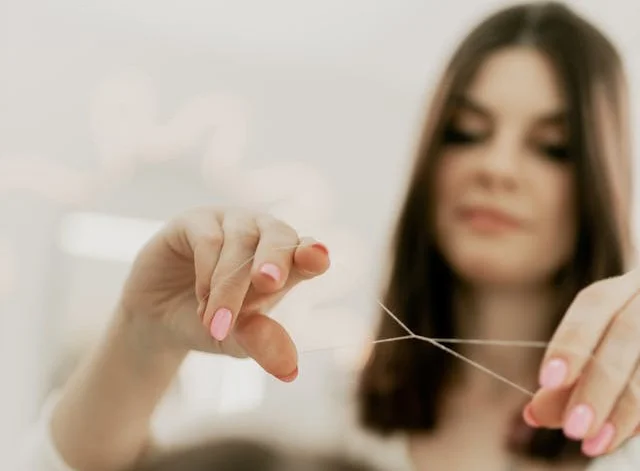
The thread is folded and twisted to create a controlled section that captures unwanted hairs. As the technician moves the twist across the treatment area, the hairs are pulled from the follicle.
Threading can be used on:
- The upper lip
- Chin
- Cheeks
- Forehead
- Sideburns
- Jawline
- Area between the brows
- Selected sections near the hairline
- Small areas of the neck when appropriate
Unlike shaving or dermaplaning, threading does not cut hair at the surface. The removed hair must gradually grow again from the follicle, which generally allows the area to remain cleaner-looking for longer.
Threading does not permanently reduce hair growth. Maintenance is required as new hairs enter their natural growth cycles.
What Are Facial Threads?
The term facial threads is often misunderstood because it may refer to two unrelated services.
In facial hair removal, facial threads are cotton threads used externally to remove unwanted hair. Nothing is inserted into the skin, and the thread is discarded after the appointment.
In medical aesthetics, facial threads may refer to absorbable sutures placed beneath the skin during a thread-lift procedure. A thread lift is intended to support or reposition tissue and must be performed by an appropriately qualified medical professional.
The service discussed in this guide is strictly facial hair removal. It does not lift facial tissue, tighten loose skin, inject medication, or leave any material beneath the skin.
When reviewing facial threads before and after photographs, always confirm whether the images show hair-removal threading or a medical thread lift.
Facial Threading vs Waxing
Threading and waxing both remove hair from the follicle, but the application methods are different.
How Facial Threading Works
Threading removes hair gradually using twisted cotton thread. The technician can treat narrow rows, individual hairs, and carefully planned facial borders.
This level of control can be valuable around:
- The upper-lip border
- Sideburn transitions
- The forehead hairline
- The chin
- Jawline edges
- Areas near the eyebrows
How Facial Waxing Works
Waxing uses an adhesive product that is applied to the skin and removed with or without a strip. The wax grips multiple hairs and removes them together.
Waxing can be efficient for broader treatment areas, but the product also contacts the skin surface.
Precision
Threading offers greater control when the goal is to preserve natural boundaries.
The technician can remove selected hairs without creating a large, sharply defined gap between treated and untreated sections.
Waxing removes a wider area with each application. It can produce clean results quickly, but exact placement is especially important around sideburns and hairlines.
Skin Contact
Threading involves repeated movement of cotton thread across the skin. Temporary redness and sensitivity can still occur.
Waxing adheres to the skin before removal. It may be unsuitable when the skin is fragile, sunburned, irritated, recently exfoliated, or affected by certain active skincare products.
Speed
Waxing may be faster for extensive cheek, sideburn, or jawline growth.
Threading may take longer because the technician works gradually, but this controlled process can be beneficial for delicate or highly visible facial areas.
Product Sensitivity
Threading does not require wax, resin, adhesive strips, fragrance, or depilatory ingredients.
Wax formulas may contain ingredients that do not suit every skin type. Anyone with a history of reactions should discuss the product before treatment.
Which Is Better?
Threading may be preferable when precision, gradual removal, and natural borders are priorities.
Waxing may be preferable when a larger area requires faster treatment and the skin is healthy enough to tolerate wax.
Neither method should be performed directly over open, infected, actively inflamed, or severely irritated skin.
Facial Threading vs Dermaplaning
Dermaplaning and threading are sometimes compared because both can reduce visible facial hair, but they provide different treatments.
How Dermaplaning Works
Dermaplaning uses a specialized blade to remove fine surface hair and dead skin cells. It is an exfoliating procedure as well as a hair-removal treatment.
The hair is cut at the skin’s surface rather than removed from the follicle.
How Threading Differs
Threading removes selected hairs from the root and does not intentionally exfoliate the entire facial surface.
A threading appointment can focus on one or two sections, such as the upper lip and chin, without treating the whole face.
Longevity
Because threading removes hair from the follicle, visible regrowth may take longer to appear.
Dermaplaning removes hair at the surface, so the hair may become noticeable sooner as it grows.
Skin-Surface Benefits
Dermaplaning may create immediate smoothness by removing both fine hair and surface buildup.
Threading improves the visual smoothness of the face by removing hair, but it does not provide the same exfoliating effect.
Which Is Better?
Choose threading when your main goal is targeted facial hair removal with longer-lasting temporary results.
Choose professional dermaplaning when you want broad surface exfoliation and removal of fine facial hair, provided your skin is suitable.
The treatments should not be scheduled too closely together without professional guidance. Combining follicle-level removal with recent exfoliation can increase temporary sensitivity.
Facial Threading vs Shaving
Shaving is one of the fastest methods of facial hair removal, but its results and maintenance differ significantly from threading.
How Shaving Works
A razor cuts the hair at or slightly above the skin’s surface.
The follicle remains in place, so the hair continues growing without needing to regenerate from the root.
How Threading Works
Threading pulls the captured hair from the follicle. This generally delays visible regrowth compared with shaving.
Comfort
Shaving should not cause pulling discomfort when performed correctly.
Threading can cause brief pinching, pulling, or stinging sensations, especially around the upper lip and chin.
Maintenance
Shaving may require frequent repetition because surface-level regrowth appears relatively quickly.
Threading appointments are commonly repeated every two to five weeks, depending on the treatment area and personal hair-growth pattern.
Precision Around Borders
Threading allows gradual work around sideburns, the upper lip, and the forehead.
A razor can remove hair quickly, but creating a natural sideburn or hairline transition may be more difficult without professional guidance.
Does Shaving Make Hair Grow Back Thicker?
Shaving does not increase the number of follicles or permanently make hair thicker. Regrowth may feel coarser because the hair was cut with a blunt edge.
Threaded hair grows naturally from the follicle and may initially feel softer as it emerges.
Facial Threading vs Tweezing
Tweezing and threading both remove hairs from the follicle.
Tweezing removes one hair at a time, making it useful for isolated chin or jawline hairs. Threading can remove multiple fine hairs in a controlled section.
Tweezing May Be Suitable For:
- One or two isolated hairs
- Minor maintenance between appointments
- Resistant hairs missed during another service
- Small corrections
Threading May Be Suitable For:
- Upper-lip hair
- Multiple chin hairs
- Fine cheek growth
- Forehead hair
- Sideburn cleanup
- Jawline maintenance
- Several treatment areas during one appointment
Repeatedly tweezing short hairs below the surface can irritate the skin and contribute to inflammation. Avoid digging into the skin or repeatedly pulling from an already irritated follicle.
Which Method Is Best for the Upper Lip?
The upper lip is a delicate area with thin skin and frequent movement.
Threading allows the technician to treat the area in small sections and control the border near the lips.
Waxing may remove upper-lip hair quickly but requires healthy, intact skin and careful product selection.
Shaving provides painless home maintenance but may need to be repeated more frequently.
Dermaplaning may remove fine upper-lip hair as part of a broader facial treatment, but it cuts the hair at the surface.
Threading may be an excellent choice for someone who wants longer-lasting temporary removal without wax.
Which Method Is Best for Chin Hair?
Chin hair can vary from fine coverage to isolated coarse hairs.
Threading works well when several visible hairs need treatment. Tweezing may be sufficient for one or two isolated hairs.
Dense, deeply rooted, or rapidly returning chin hair may require frequent maintenance. Electrolysis, laser hair reduction, or medical assessment may be worth considering when the growth is substantial.
Sudden changes in chin or jawline hair should be evaluated by a healthcare professional, especially when accompanied by menstrual changes, severe acne, scalp hair thinning, or other hormonal symptoms.
Which Method Is Best for the Cheeks?
Fine cheek hair may be treated with threading, waxing, dermaplaning, or shaving.
Threading is useful when selected cheek sections need hair removal without treating the full facial surface.
Dermaplaning may be more efficient when widespread fine hair and surface exfoliation are both desired.
Waxing may remove broader cheek growth quickly but can be unsuitable for sensitized skin.
Shaving is convenient for frequent home maintenance but provides shorter-lasting results.
The best method depends on whether the priority is follicle-level removal, exfoliation, speed, or convenience.
Which Method Is Best for Sideburns?
Sideburns require careful planning because the treated area must blend naturally into the scalp hair.
Threading allows the technician to work gradually and assess the transition throughout the appointment.
Waxing can remove a larger sideburn section quickly, but over-removal may create a harsh or unnatural border.
Shaving may leave a visible line when the boundary is not planned carefully.
Professional consultation is especially important when changing the sideburn length for the first time.
Which Method Is Best for the Forehead?
Fine forehead hair can be threaded, waxed, shaved, or removed during dermaplaning.
Threading offers detailed control near the hairline and brows.
Dermaplaning may suit someone seeking general facial exfoliation in addition to hair removal.
Waxing may be efficient but should be avoided over sensitized or recently exfoliated skin.
Shaving is quick but may require more frequent maintenance.
A natural hairline border should always be preserved. Removing too much forehead hair can create an artificial gap between the treated skin and scalp hair.
Facial Threading Before and After
Professional facial threading before and after results usually show a cleaner-looking surface and reduced visible facial hair.
Before treatment, you may notice:
- Upper-lip shadow
- Fine cheek hair
- Isolated chin hairs
- Uneven sideburn growth
- Forehead hair near the hairline
- Jawline regrowth
- Makeup catching on facial hair
- Different density across both sides of the face
After treatment, the area may appear:
- Smoother-looking
- Cleaner under direct lighting
- Less shadowed around the mouth
- More balanced around the sideburns
- Easier to cover with complexion makeup
- More polished in photographs
- Better maintained around the jawline
The skin may temporarily look pink immediately afterward. This is a normal short-term response and should not be confused with the final appearance.
How Long Do Facial Threads Last?
For hair-removal threading, results generally last approximately two to five weeks.
The answer to how long do facial threads last depends on:
- Treatment area
- Hair-growth speed
- Hair thickness
- Hair density
- Hormonal factors
- Age
- Previous removal methods
- Individual follicle cycles
- Home tweezing
- Preferred smoothness
Upper-lip or chin hair may return sooner than fine forehead or cheek hair.
The cotton thread does not stay inside the face. It is discarded after the service.
Does Threading Hurt More Than Other Methods?
Threading may feel like brief pulling, pinching, or stinging.
Waxing creates a faster pulling sensation as a larger section is removed.
Tweezing creates repeated individual pinches.
Shaving and dermaplaning should not involve hair being pulled from the follicle, so they may feel more comfortable when performed correctly.
Threading sensitivity depends on:
- Treatment area
- Hair thickness
- Hair density
- Personal pain tolerance
- Recent exfoliation
- Hormonal changes
- Skin condition
- Technician technique
The upper lip is generally more sensitive than the cheeks or forehead.
Facial Threading Aftercare
Freshly threaded skin may be temporarily reactive because hair has been removed from the follicles.
For the first 12–24 hours, avoid:
- Touching or rubbing the treated skin
- Heavy makeup
- Intense exercise
- Excessive sweating
- Swimming
- Saunas
- Steam rooms
- Very hot showers
- Facial scrubs
- Retinoids
- Exfoliating acids
- Strong acne products
- Fragranced skincare
- Alcohol-heavy toners
- Self-tanning products
- Picking at raised follicles
After the initial waiting period, cleanse gently, pat the skin dry, and use products already suitable for your skin.
Reintroduce active skincare only after redness, burning, or sensitivity has settled.
Keep makeup brushes, sponges, towels, and pillowcases clean. Protect recently treated skin from excessive sun exposure.
Common Problems and Solutions
Redness After Threading
Temporary redness is common.
Avoid touching, heat, sweat, makeup, and active skincare until the skin calms.
Small Raised Bumps
The follicles may appear raised after hair removal.
Keep the area clean and avoid heavy creams or makeup. Do not squeeze or scratch the bumps.
Uneven Regrowth
Facial hairs grow through different stages, so they will not all return at the same time.
A consistent maintenance schedule may make regrowth easier to manage, although complete synchronization cannot be guaranteed.
A Few Hairs Were Missed
Very short hairs may be difficult for the thread to capture safely.
Allow the skin to settle before using sanitized tweezers or contacting the studio for a review.
Sideburns Look Too Sharp
Avoid removing more hair at home.
Allow some growth to return and request a softer, gradual transition during the next appointment.
Breakouts Appeared
Sweat, touching, heavy makeup, dirty brushes, or occlusive skincare may contribute to follicle congestion.
Use gentle care and avoid picking. Persistent, spreading, or painful breakouts should be evaluated.
Hair Returned Quickly
Upper-lip and chin growth may naturally appear sooner than hair on the cheeks or forehead.
Your maintenance schedule can be customized by treatment area.
Facial Threading Cost Compared With Other Methods
Facial threading prices depend on:
- Number of areas treated
- Hair density
- Appointment duration
- Technician experience
- Studio location
- Additional tweezing
- Makeup removal
- Full-face or individual-area booking
Waxing may be priced by individual area or full-face service.
Dermaplaning usually costs more than basic threading because it includes professional surface exfoliation.
Shaving and tweezing are inexpensive at home, but they require greater personal maintenance and may not provide the same precision around sideburns, hairlines, or multiple facial areas.
When comparing prices, ask exactly what “full face” includes. Brows, neck, sideburns, and hairline work may be priced separately.
Who Should Postpone Facial Threading?
Treatment should generally be postponed over areas with:
- Open cuts or sores
- Active skin infection
- Cold sores
- Sunburn
- Significant peeling
- Active eczema or dermatitis
- Inflamed psoriasis
- Painful cystic acne
- Broken acne lesions
- Unexplained swelling
- Fragile or easily bleeding skin
- Recent facial surgery
- Recent laser treatment
- Recent resurfacing
- Recent chemical peeling
- Unhealed cosmetic tattooing
Disclose retinoids, exfoliating acids, acne medication, professional peels, and recent facial treatments before your appointment.
Frequently Asked Questions
What Is Facial Threading?
Facial threading is a temporary hair-removal technique that uses twisted cotton thread to pull selected facial hairs from the follicle.
What Are Facial Threads?
For hair removal, facial threads are cotton threads used externally on the face. The term may also describe medical thread lifts, which are unrelated procedures.
Is Facial Threading Better Than Waxing?
Threading provides controlled hair removal without wax or adhesive strips. Waxing may be faster for broad areas. The better choice depends on skin condition and treatment goals.
Is Facial Threading Better Than Dermaplaning?
Threading is better suited to targeted follicle-level hair removal. Dermaplaning is designed for surface exfoliation and removal of fine hair across broader facial areas.
How Long Do Facial Threads Last?
Facial threading results generally remain visible for approximately two to five weeks. Upper-lip and chin hair may return sooner than fine cheek or forehead hair.
What Do Facial Threads Before and After Photos Show?
Hair-removal threading photos typically show reduced visible facial hair and cleaner facial contours. Some online photos may show medical thread lifts, so the procedure should always be confirmed.
Does Facial Threading Make Hair Grow Back Thicker?
No. Threading does not increase the number of hair follicles or permanently change fine hair into coarse hair.
Can I Wear Makeup After Facial Threading?
Wait approximately 12–24 hours, or until redness and sensitivity have settled, before applying heavy makeup to freshly threaded skin.
How Often Should Facial Threading Be Repeated?
Many people schedule treatment every two to five weeks. Timing depends on the facial area, natural growth rate, and preferred level of smoothness.
Where Can I Book Facial Threading in Los Angeles?
Beverly Microblading Center provides customized facial threading in Los Angeles from our Westwood studio, serving Beverly Hills, Brentwood, Santa Monica, Century City, Bel Air, Culver City, and nearby neighborhoods.
Choose the Right Hair-Removal Method for Your Skin
Professional facial threading Los Angeles services offer precise, targeted hair removal with natural transitions around the sideburns, hairline, upper lip, and jawline.
Book your Westwood appointment for personalized treatment areas, clear aftercare guidance, and a maintenance plan based on your facial hair growth.
Book Your Free Consultation
Get expert advice and a personalized treatment plan—no commitment required