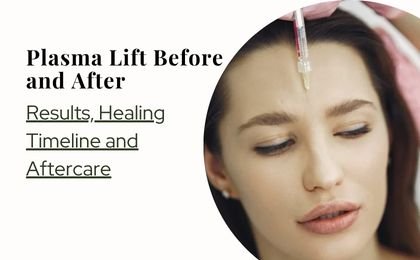
Plasma fibroblast treatment is often promoted with dramatic before-and-after images showing smoother-looking eyelids, softened fine lines, or improved appearance in a small area of mild skin laxity. Those photographs can be useful, but they rarely explain the complete experience between the first image and the final result.
The recovery period may involve swelling, redness, dark treatment points, crusting, dryness, itching, sensitivity, and temporary changes in skin color. A meaningful plasma lift before and after comparison should therefore show a fully healed result—not the temporary tightening that can appear while the area is swollen or crusted.
Results also differ according to the treatment area, device, treatment intensity, provider qualifications, skin tone, healing history, sun exposure, and aftercare. Small studies have reported improvement in selected upper-eyelid concerns, but the available research remains limited and does not establish predictable results for every person or every facial area.
A qualified medical consultation is especially important in California. The California Board of Barbering and Cosmetology limits licensees to beautification procedures that do not destroy living tissue; its public materials identify fibroblast information separately and state that cosmetology and esthetics licensees may not perform procedures that affect living tissue.
At a Westwood consultation, individuals visiting from Beverly Hills, Century City, Brentwood, Santa Monica, Bel Air, Culver City, and nearby Los Angeles neighborhoods should receive a clear explanation of the procedure, expected recovery, pigmentation risks, alternatives, follow-up plan, and total cost before making a booking decision.
What Is Plasma Fibroblast?
When people ask what is plasma fibroblast, they are generally referring to a procedure performed with a low-power plasma pen or plasma-exeresis device.
The device produces an electrical arc through the air between its tip and the skin. This creates a controlled thermal effect and intentional tissue injury in the selected area. The FDA classifies certain low-power plasma pens as Class II electrosurgical devices intended for skin-lesion destruction and tissue coagulation. Clearance is device- and indication-specific, so it should not be assumed that every plasma pen is cleared for every wrinkle, eyelid, tightening, or facial-lifting claim.
During a cosmetic plasma fibroblast treatment, the provider may create a pattern of small treatment points. These points usually darken and form crusts during the early healing period.
The procedure is sometimes marketed as a plasma face lift, but it is not a surgical facelift. It does not remove substantial excess skin, reposition deeper facial structures, or provide the same degree of correction as facial surgery.
What Do Plasma Lift Before and After Photos Usually Show?
A well-documented series may show changes in:
- Mild upper-eyelid laxity
- Fine lines around a selected treatment area
- Surface texture
- Small areas of mild looseness
- The appearance of certain medically evaluated skin lesions
- A focused area treated for tissue coagulation
The most trustworthy photographs should show:
- The same camera distance
- Similar lighting
- The same head position
- The same facial expression
- No makeup disguising the treated area
- The number of sessions completed
- The date of the final photograph
- A fully healed result
- Any complications or prolonged discoloration
Before-and-after photography can be misleading when the “after” image is taken while swelling is still present. Swelling may temporarily make an area look tighter than it will after recovery.
Photos can also exaggerate improvement when the patient raises the brows, changes eye position, smiles differently, or is photographed under brighter or more directional lighting.
Fibroblasting Before and After: The Complete Timeline
Understanding the stages between treatment and the final photograph helps create more realistic expectations.
Before Treatment: Medical Assessment and Planning
Before proceeding, the provider should evaluate:
- The exact concern
- Skin tone and pigmentation history
- Previous scars
- History of keloids or raised scars
- Wound-healing problems
- Active skin conditions
- Medications
- Anticoagulant or antiplatelet use
- Previous laser, peel, injectable, or surgical treatments
- Sun exposure
- Upcoming travel and events
- Ability to follow aftercare
- Alternative treatment options
Standardized photographs may be taken at this stage. The treatment area should be clearly defined before any energy is applied.
The consultation should also identify the exact device and its intended use. FDA clearance for one purpose does not automatically validate every commercial claim made for the device.
Immediately After Treatment
The treated area may look:
- Red
- Swollen
- Tight
- Tender
- Darker than expected
- Covered with small brown or black treatment points
The immediate appearance should not be interpreted as the final result.
Around the eyes, swelling may become more noticeable during the hours following treatment. In one observational upper-eyelid study, edema was among the most commonly reported early symptoms.
Days 1–3: Swelling and Visible Treatment Points
During the first few days, swelling, warmth, sensitivity, and redness may continue.
The eyelid area may appear uneven because one side can swell more than the other. This temporary difference does not necessarily mean the final result will be asymmetrical.
The treatment points may darken as they dry. Avoid judging shape, symmetry, or tightening during this stage.
Century City professionals and Westwood residents considering treatment should plan around the possibility of visible recovery rather than assuming they can return immediately to public-facing work without noticeable signs.
Days 3–10: Crusting, Dryness, and Itching
Small crusts commonly become more defined during the first week.
The skin may feel:
- Dry
- Tight
- Rough
- Itchy
- Sensitive during cleansing
The crusts must be allowed to separate naturally. Pulling or scratching them can disturb healing tissue and may increase the risk of prolonged marks, infection, pigmentation changes, or scarring.
A published upper-eyelid study identified itching as a common symptom during follow-up.
Weeks 2–4: Early Surface Recovery
After the crusts fall away, the new skin may look:
- Pink
- Red
- Lighter than the surrounding skin
- Darker than the surrounding skin
- Slightly shiny
- More sensitive than usual
This stage can be confusing because the area may look healed on the surface while deeper recovery is still continuing.
Do not rush into chemical peels, microneedling, waxing, threading, strong retinoids, exfoliating acids, or other energy-based treatments over the area.
Weeks 4–8: Continued Color and Texture Changes
Redness or uneven coloration may continue settling.
Some people may begin seeing a softer, more natural-looking result during this stage. Others may still experience discoloration or textural irregularity that requires monitoring.
Post-inflammatory hyperpigmentation is a documented complication. One published case involving the eye area followed discoloration over several months, demonstrating that not every pigment change resolves within the short timelines used in promotional content.
Two to Three Months and Beyond: Final Assessment
The provider should wait until the skin has adequately recovered before determining:
- The degree of improvement
- Whether the result is symmetrical
- Whether pigmentation has settled
- Whether a second treatment is appropriate
- Whether another procedure would be safer or more effective
Some studies have assessed outcomes several months after the final treatment rather than immediately after crusting resolved.
What Results Are Realistic?
Plasma treatment may create visible improvement in selected mild concerns, particularly when the treatment area is small and the patient is appropriately chosen.
Possible outcomes may include:
- A modest improvement in mild upper-eyelid laxity
- A smoother-looking selected area
- Softening of certain fine lines
- A subtle change in surface appearance
- Removal of an appropriately diagnosed benign lesion when the device is intended for that use
A 40-patient study of upper-eyelid dermatochalasis reported improvement after three treatment sessions, while a smaller pilot study also observed clinical change after a series of procedures. These studies are encouraging but do not prove that every patient will receive the same result or that plasma treatment equals surgery.
A separate 16-patient study reported that satisfaction was mixed when patients considered whether they would undergo the procedure again and whether results met expectations.
Results May Be Limited When the Concern Involves:
- Significant excess eyelid skin
- Advanced facial laxity
- Deep facial folds
- Loss of facial volume
- Muscle-related expression lines
- Severe acne scars
- Extensive sun damage
- Widespread pigmentation
- Functional eyelid problems
- A concern requiring surgical correction
Honest treatment planning is more valuable than promising a dramatic transformation that a non-surgical procedure is unlikely to provide.
Plasma Face Lift vs Surgical Facelift
The term plasma face lift can suggest that the procedure lifts the entire face. In reality, it is generally used on selected areas and does not perform the structural changes of facial surgery.
Plasma Fibroblast Treatment
Plasma treatment:
- Creates controlled thermal injury
- Is performed without surgical incisions
- Usually targets smaller areas
- Produces visible crusting and recovery
- May offer modest improvement in selected mild concerns
- Carries risks of scarring and pigment change
- Does not remove substantial excess skin
Surgical Facelift
A surgical facelift may:
- Reposition deeper tissues
- Remove excess skin
- Address advanced lower-face and neck laxity
- Require anesthesia and surgical recovery
- Provide a greater degree of structural correction
A medical provider should recommend surgical consultation when the desired change exceeds what plasma treatment can reasonably provide.
Plasma Fibroblast vs Laser Resurfacing
Laser resurfacing uses controlled light energy to treat selected skin depths. Depending on the device, it may address wrinkles, uneven pigmentation, scars, or texture.
Both laser and plasma treatments can involve:
- Redness
- Swelling
- Crusting
- Pigmentation changes
- Infection risk
- Downtime
- Careful sun avoidance
The correct option depends on skin tone, the concern, treatment depth, device characteristics, provider experience, and expected recovery.
Neither treatment should be selected only because one has a lower advertised price.
Plasma Fibroblast vs Microneedling
Traditional microneedling uses needles to create controlled microchannels. It does not produce the same electrical arc or pattern of visible plasma-treatment crusts.
Microneedling may be more appropriate for broader concerns such as:
- Uneven texture
- Selected superficial scars
- Enlarged-looking pores
- General skin-quality improvement
Plasma treatment may be discussed for smaller, focused areas when the provider considers it medically appropriate.
Plasma Fibroblast Risks
Plasma fibroblast is not a gentle facial. The procedure intentionally affects tissue and may cause complications.
Potential risks include:
- Pain
- Significant swelling
- Prolonged redness
- Crusting
- Infection
- Slow healing
- Hyperpigmentation
- Hypopigmentation
- Persistent dot-like marks
- Textural changes
- Scarring
- Asymmetry
- Insufficient improvement
- Eye-area injury when improperly performed
FDA adverse-event reports have described serious scarring and loss of pigment following plasma-pen procedures. Individual reports do not establish how frequently a complication occurs, but they demonstrate that severe outcomes are possible.
Common Problems and What to Do
Swelling Looks Worse on One Side
Uneven swelling can occur temporarily, particularly around the eyes.
Follow the provider’s instructions and contact the clinic if swelling continues increasing, becomes painful, affects vision, or differs substantially from the expected recovery described before treatment.
The Treatment Points Are Itchy
Itching may occur during crust formation.
Do not scratch or peel the area. Use only products approved by the treating provider.
The Skin Looks Darker After the Crusts Fall
Temporary post-inflammatory color change may occur, but worsening or persistent darkening should be evaluated.
Avoid direct sun and follow the provider’s sun-protection instructions. Do not attempt to treat the discoloration with strong acids, bleaching products, or retinoids unless medically advised.
White Spots Have Appeared
Light spots may indicate reduced pigment or another healing complication.
Contact the treating provider promptly. Do not camouflage the issue with further plasma treatment before the skin has been assessed.
The Area Is Painful and Producing Discharge
Increasing pain, warmth, spreading redness, or discharge can suggest infection.
Seek prompt medical assessment rather than waiting for a routine follow-up.
The Result Looks Uneven
Do not schedule immediate correction while the area is healing.
Allow swelling and pigmentation to settle, then complete a formal assessment with standardized photographs.
Plasma Fibroblast Aftercare
The provider’s written instructions should take priority because the treatment area and device may require specific care.
General guidance commonly includes:
- Keep the area clean as instructed
- Wash your hands before touching nearby skin
- Apply only approved aftercare products
- Do not scratch or remove crusts
- Avoid makeup until approved
- Avoid swimming
- Avoid saunas and steam rooms
- Limit intense exercise and heavy sweating
- Avoid direct sunlight
- Do not use tanning beds
- Pause retinoids and exfoliating acids
- Avoid facial scrubs
- Do not wax or thread the area
- Avoid home remedies
- Postpone other cosmetic procedures
- Attend the scheduled review
Seek urgent medical attention for vision changes, eye pain, severe swelling, breathing difficulty, fever, rapidly spreading redness, or signs of a serious allergic or infectious reaction.
Plasma Fibroblast Cost
The plasma fibroblast cost varies based on:
- Treatment area
- Area size
- Number of sessions
- Medical-provider qualifications
- Device used
- Procedure complexity
- Comfort measures
- Follow-up care
- Aftercare products
- Geographic location
- Management of complications
A small focused area may cost less than treating both eyelids or several facial areas.
Ask for a written estimate that identifies what is included. A headline price may not include medical consultation, follow-up visits, medication, aftercare, or additional sessions.
What Influences Plasma Lift Cost?
The plasma lift cost should be evaluated against safety, qualifications, and complete care—not simply the lowest offer.
Before booking, ask:
- Who performs the procedure?
- What professional license do they hold?
- What device is used?
- What is the device’s intended use?
- How many sessions are expected?
- Is the consultation included?
- Are follow-up appointments included?
- What aftercare is provided?
- How are complications managed?
- Is the quote per area or per session?
A low-priced service can become costly when poor healing requires medical treatment or scar management.
Who Should Avoid or Postpone Treatment?
Treatment may be unsuitable when there is:
- Active skin infection
- Open skin
- Cold sores
- Sunburn
- Active eczema or dermatitis
- Psoriasis in the treatment area
- Inflamed acne
- Poorly controlled diabetes
- Poor wound healing
- Immunosuppression
- A bleeding disorder
- Anticoagulant use
- A history of keloid scarring
- Significant pigment change after minor injuries
- Recent surgery
- Recent laser or chemical peeling
- Recent injectable treatment
- Unhealed permanent makeup
- An undiagnosed skin lesion
Elective treatment is commonly deferred during pregnancy and may be postponed during breastfeeding depending on the medical assessment and products required.
Frequently Asked Questions
What Is Plasma Fibroblast?
Plasma fibroblast is a procedure in which a plasma pen produces an electrical arc and controlled thermal injury in selected skin tissue. It is not an injection of fibroblasts or plasma into the face.
What Does Plasma Lift Before and After Look Like?
A fully healed comparison may show modest improvement in mild laxity, selected fine lines, or surface appearance. The images should be taken under similar lighting and should disclose how many treatments were completed.
How Long Does Plasma Fibroblast Healing Take?
Crusting may resolve during the early weeks, but redness, sensitivity, and pigment changes can last longer. Final results should not be judged until the area has adequately healed.
Is a Plasma Face Lift the Same as Surgery?
No. A plasma face lift does not reposition deep tissue or remove substantial excess skin like a surgical facelift.
Can Plasma Fibroblast Leave Scars?
Yes. Scarring is a possible complication, especially when treatment is too aggressive, healing is disrupted, or the procedure is performed by an unqualified provider. FDA adverse-event reports include serious scarring after plasma-pen treatment.
Can Plasma Treatment Cause Dark Spots?
Yes. Post-inflammatory hyperpigmentation may occur and can occasionally persist for months.
How Much Does Plasma Fibroblast Cost?
The price depends on the treatment area, provider, device, number of sessions, aftercare, and included follow-up.
How Many Treatments Are Needed?
There is no universal number. Some studies used two or three sessions, but the appropriate plan must be based on healing, treatment response, and medical suitability.
Is Plasma Fibroblast Suitable for Every Skin Tone?
No treatment is automatically suitable for every skin tone. Pigmentation history, sun exposure, skin response, treatment intensity, and provider experience must be evaluated carefully.
Where Can I Discuss Plasma Fibroblast Treatment in Los Angeles?
A medical consultation in Westwood can serve individuals from Beverly Hills, Brentwood, Santa Monica, Century City, Bel Air, Culver City, and nearby Los Angeles communities.
Understand the Full Journey Before Booking
A responsible plasma lift before and after discussion includes the visible healing stages, realistic degree of improvement, pigmentation risk, possible complications, and complete treatment cost.
Book a qualified Westwood medical consultation to review your skin, compare alternatives, and decide whether plasma fibroblast treatment is an appropriate option for your concern.
Book Your Free Consultation
Get expert advice and a personalized treatment plan—no commitment required