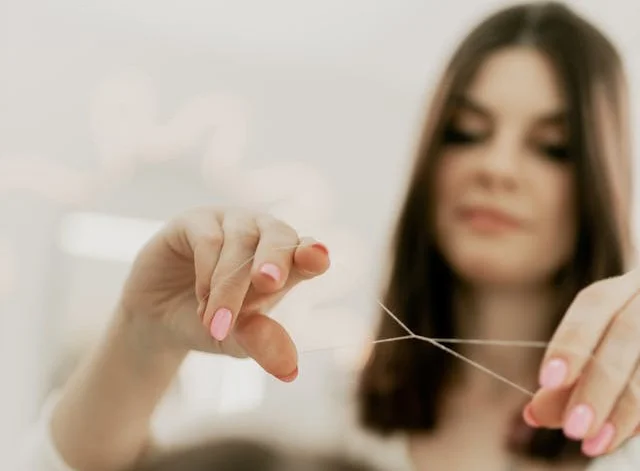

Facial threading offers precise, temporary hair removal for areas such as the upper lip, chin, cheeks, forehead, sideburns, and jawline. The technician uses a twisted cotton thread to catch unwanted hairs and remove them from the follicle, without applying hot wax, adhesive strips, razors, or depilatory creams.
The cost of facial threading in Los Angeles varies because appointments are not always structured in the same way. Some studios price each facial area separately, while others offer combination packages or a full-face service. The amount of hair, size of the treatment area, appointment duration, technician experience, and level of detail can all influence the final price.
A quick upper-lip appointment generally requires less time than complete facial threading involving the cheeks, chin, forehead, sideburns, and jawline. A first visit may also require additional consultation time to identify natural hairline boundaries, discuss skin sensitivity, and confirm exactly which areas should be treated.
At Beverly Microblading Center, our Westwood location provides convenient access for people visiting from Beverly Hills, Brentwood, Century City, Bel Air, Santa Monica, Culver City, and nearby Los Angeles neighborhoods. Each appointment is planned around the person’s facial hair pattern rather than applying the same treatment boundaries to every face.
This guide explains facial-threading prices, what may be included, how to compare studios, how long results last, and how threading compares with waxing, shaving, dermaplaning, tweezing, and longer-term hair-reduction options.
What Is Facial Threading?
Facial threading is a method of removing unwanted facial hair with a loop of twisted cotton thread. As the thread rolls across the skin, hairs become caught between the twisted sections and are pulled from the follicle.
Threading can remove individual hairs or several fine hairs within a controlled section. It is particularly useful for smaller facial areas where maintaining accurate boundaries is important.
Common treatment areas include:
- Upper lip
- Chin
- Cheeks
- Forehead
- Sideburns
- Jawline
- Space between the eyebrows
- Selected areas near the hairline
- Small sections of the neck when suitable
Because threading removes hair from the follicle rather than cutting it at the surface, visible regrowth generally takes longer to appear than it does after shaving. The American Academy of Dermatology notes that threading results may remain visible for approximately four to five weeks, although actual longevity varies by treatment area and individual growth cycle.
Threading is not permanent hair removal. Maintenance appointments are needed as new hairs grow.
What Are Facial Threads?
The question “what are facial threads?” can refer to two unrelated cosmetic services.
For facial hair removal, facial threads are cotton threads used externally to catch and remove hair. The thread is discarded after the service, and nothing remains inside the skin.
The same phrase may also be used for a medical thread lift. During a thread lift, a qualified medical professional places medical-grade sutures beneath the skin to support or reposition facial tissue. That procedure is completely different from hair-removal threading.
The service discussed on this page is non-surgical facial hair removal. It does not:
- Insert threads under the skin
- Lift facial tissue
- Tighten loose skin
- Stimulate collagen intentionally
- Inject medication
- Change facial structure
When viewing facial threads before and after images online, always verify whether the photographs show hair removal or a medical thread-lift procedure.
How Much Does Facial Threading Cost?
There is no single price that applies to every facial-threading appointment. Pricing usually depends on the number and size of the areas treated.
A studio may offer separate rates for:
- Upper-lip threading
- Chin threading
- Cheek threading
- Forehead threading
- Sideburn threading
- Jawline threading
- Eyebrow and facial-threading combinations
- Full-face threading
A full-face appointment generally costs more than treatment of one small area because it requires additional time, skin assessment, hairline planning, and detailed work across several facial sections.
Rather than choosing a service based only on the lowest advertised rate, confirm exactly what is included. One studio’s definition of “full face” may differ from another’s. Brows, neck, sideburns, forehead, or hairline detailing may be excluded or priced separately.
Contact the studio directly for current pricing and available packages rather than relying on an old online listing.
Factors That Affect Facial Threading Cost
Number of Treatment Areas
The strongest pricing factor is usually how much of the face will be treated.
An upper-lip appointment involves a small, clearly defined area. A complete facial cleanup may involve several distinct sections that require different techniques and boundaries.
A person may book:
- Upper lip only
- Chin only
- Upper lip and chin
- Cheeks and sideburns
- Forehead and hairline
- Jawline and chin
- Full-face threading
- Facial threading with eyebrow shaping
Combination appointments may be priced differently from booking every area separately.
Hair Density
A light layer of fine facial hair usually requires less time than dense or coarse growth.
Dense hair may require:
- More threading passes
- Additional skin positioning
- Longer appointment time
- Greater attention to irritation
- More detailed finishing
- Limited tweezing of resistant hairs
The technician should avoid repeatedly passing over skin that has already become sensitive simply to remove every extremely short hair.
Hair Thickness
Coarse upper-lip, chin, or jawline hairs may require more controlled removal than fine cheek or forehead hair.
Thicker hairs can also feel more uncomfortable during removal, so the technician may work in smaller sections and allow brief pauses.
Appointment Duration
Small-area maintenance may take only a few minutes, while multiple areas or full-face threading can require a longer appointment.
Time may also be needed for:
- Consultation
- Makeup removal
- Skin assessment
- Hairline planning
- Treatment-area confirmation
- Threading
- Detailed tweezing
- Soothing care
- Aftercare instructions
First Appointment or Routine Maintenance
A first appointment may cost more or take longer than regular maintenance because the technician needs to learn your growth pattern and preferences.
During the initial visit, you may need to discuss:
- Which areas you want treated
- How much sideburn hair should remain
- Whether the forehead hairline should be refined
- Where the jawline treatment should end
- Previous irritation
- Current skincare
- How quickly your hair usually returns
- Whether you want brows included
Once the treatment plan has been established, maintenance appointments may be more straightforward.
Technician Experience
Facial threading requires control, especially around the lip border, sideburns, hairline, brows, and jawline.
An experienced technician understands how to:
- Keep sideburn transitions natural
- Avoid an artificial forehead border
- Remove hair close to the lip safely
- Adjust technique for different hair thicknesses
- Limit repeated contact on sensitive skin
- Preserve hair the guest wants to keep
- Recognize when treatment should be postponed
Threading takes practice, and inexperienced technique can contribute to uneven results or ingrown hairs.
Studio Location
Operating costs differ throughout Los Angeles, so prices may vary between Westwood, Beverly Hills, Santa Monica, Culver City, and other neighborhoods.
Location may affect:
- Studio rent
- Appointment demand
- Staffing
- Service duration
- Product standards
- Scheduling convenience
- Overall studio experience
A nearby location may also offer practical value. Century City professionals may prefer a Westwood appointment that fits around work, while Brentwood and Beverly Hills visitors may prioritize returning to a technician familiar with their facial hair boundaries.
Additional Services
The total price may increase when facial threading is combined with:
- Eyebrow threading
- Brow tinting
- Henna brows
- Brow lamination
- Facial waxing
- Detailed tweezing
- Brow trimming
- Makeup removal
- Post-treatment soothing care
Ask whether combination pricing is available when booking several services together.
What Should Professional Facial Threading Include?
Consultation
The technician should confirm exactly which areas you want treated.
This is especially important for sideburns, the forehead, and the jawline, where treatment boundaries can noticeably affect the finished appearance.
Skin Assessment
The face should be checked for:
- Open cuts
- Active irritation
- Sunburn
- Peeling
- Inflamed acne
- Cold sores
- Dermatitis
- Infection
- Recent procedural sensitivity
Treatment should be modified or postponed when the skin is not suitable.
Cleansing
Makeup, oil, sunscreen, and skincare residue should be removed from the selected areas.
Clean skin helps the thread grip facial hair more effectively.
Boundary Planning
The technician should identify where the treated area will begin and end.
Natural transitions should be maintained around:
- Sideburns
- Forehead hairline
- Temples
- Brows
- Jawline
- Neck
Controlled Hair Removal
The technician should work gradually, checking both the result and the skin’s response throughout the service.
Detailed Refinement
Sanitized tweezers may be used for isolated hairs that are too short or resistant for the thread to capture effectively.
Soothing Care
A gentle product may be applied when appropriate for the person’s skin.
Aftercare Guidance
The appointment should conclude with instructions regarding touching, makeup, exercise, heat, active skincare, and follow-up timing.
What Does Full-Face Threading Include?
“Full face” is not defined identically by every salon.
A full-face service may include:
- Upper lip
- Chin
- Cheeks
- Forehead
- Sideburns
- Jawline
The following areas may or may not be included:
- Eyebrows
- Between the brows
- Neck
- Hairline detailing
- Nose
- Ears
Confirm the included treatment areas before booking. This prevents unexpected charges and ensures enough appointment time is reserved.
At a Westwood studio, a Beverly Hills guest requesting complete event preparation may have different needs from a Century City professional who wants only upper-lip and chin maintenance. The service should be matched to the actual treatment goals rather than automatically recommending the largest package.
Facial Threading Before and After Results
Professional facial threading before and after results generally show less visible hair and a cleaner facial appearance.
Before treatment, concerns may include:
- Dark upper-lip hair
- Isolated chin hairs
- Fine hair across the cheeks
- Uneven sideburn growth
- Forehead hair near the hairline
- Jawline regrowth
- Makeup gathering on facial hair
- Shadowing around the mouth
After treatment, the selected areas may look:
- Smoother
- Cleaner under direct lighting
- Less shadowed
- More polished beneath makeup
- Better balanced around the sideburns
- Neater near the forehead
- More defined around the lip and chin
Threading removes hair but does not resurface the skin, reduce pores, treat acne scars, lighten pigmentation, or tighten facial tissue.
DermNet notes that threading can provide clean lines and is commonly used for the upper lip and other facial areas. It also lists possible hair-removal side effects such as pain, folliculitis, ingrown hairs, scarring, and post-inflammatory hyperpigmentation.
How Long Do Facial Threads Last?
The answer to how long do facial threads last depends on the meaning of the phrase.
For hair-removal threading, the thread itself is discarded immediately after the service. Nothing stays in the face.
The smooth-looking result generally lasts approximately two to five weeks, depending on:
- Treatment area
- Hair thickness
- Hair density
- Natural growth rate
- Hormonal factors
- Age
- Individual follicle cycles
- Previous hair-removal method
- Home tweezing
- Shaving between appointments
- Preferred level of smoothness
Upper-lip and chin hair may become visible sooner than fine cheek or forehead hair.
One person may need upper-lip maintenance every two or three weeks while booking cheeks or forehead less frequently.
How Often Should Facial Threading Be Scheduled?
Many guests schedule maintenance every two to five weeks.
The ideal schedule depends on treatment area, hair thickness, natural growth speed, hormonal factors, previous hair-removal methods, preferred smoothness, skin sensitivity, and home maintenance. Upper-lip or chin hair may become noticeable on a different schedule from cheek or forehead hair, so appointments can be customized by area.
Regular maintenance may make each visit more efficient because the established boundaries are already known and less hair needs to be removed.
However, threading should not be repeated simply because one or two extremely short hairs become visible. The hair needs enough length for the thread to capture it safely and effectively.
Facial Threading vs Waxing Cost
Threading and waxing prices vary by treatment area and studio.
Facial Threading
Threading offers:
- Controlled removal
- No heated wax
- No adhesive strips
- Precise facial borders
- Treatment of narrow areas
- Root-level hair removal
- Temporary results lasting several weeks
Facial Waxing
Waxing offers:
- Faster removal across broad areas
- Efficient treatment of dense growth
- Root-level hair removal
- Results that may last several weeks
Waxing involves greater product contact with the skin and requires additional caution when the area is irritated, recently exfoliated, or affected by certain active skincare products. The AAD advises that waxing can cause temporary redness and irritation and that specific medications or skincare factors may increase the risk of skin tearing.
Threading may offer better value for small, detailed areas. Waxing may be more time-efficient for larger areas when the skin is suitable.
Facial Threading vs Dermaplaning Cost
Dermaplaning generally involves professional surface exfoliation as well as removal of fine facial hair. Because it is a broader skin treatment, it may cost more than threading one or two small areas.
Threading removes selected hairs from the follicle but does not intentionally exfoliate the full face.
Choose threading when the main goal is:
- Upper-lip removal
- Chin cleanup
- Sideburn refinement
- Jawline maintenance
- Targeted forehead or cheek hair removal
Choose professional dermaplaning when both widespread fine-hair removal and surface exfoliation are desired.
The treatments should not be scheduled too close together without guidance because recently exfoliated skin may be more sensitive to threading.
Facial Threading vs Shaving Cost
Shaving is inexpensive and convenient at home. However, it cuts hair at the surface, so maintenance may be needed daily or every few days depending on the growth pattern.
Threading costs more per appointment but may provide several weeks before the removed hairs become clearly visible.
Shaving may be the better choice when someone wants:
- Painless home maintenance
- Fast treatment
- Broad facial coverage
- No follicle-level pulling
Threading may offer better value when someone wants:
- Less frequent maintenance
- Professional control
- Natural sideburn and hairline borders
- Targeted upper-lip or chin removal
- No razor contact
Facial Threading vs Tweezing Cost
Home tweezing appears inexpensive, but it is practical only when a small number of hairs need removal.
Threading is more efficient when treating an entire upper lip, cheek, forehead, or sideburn area.
Repeated home tweezing can also contribute to:
- Uneven hair removal
- Inflamed follicles
- Broken hairs
- Digging into the skin
- Irregular treatment boundaries
- Increased risk of ingrown hairs
Tweezing may be useful for one or two obvious hairs between appointments, but it should not replace professional full-area treatment when precision is important.
Facial Threading vs Laser Hair Reduction
Laser hair reduction is fundamentally different from threading.
Threading provides temporary removal from the follicle. Laser treatments use light energy to target hair follicles and usually require a series of appointments.
Laser may be considered when someone wants longer-term reduction and has hair suitable for the technology. It may not work equally well on every hair color or skin type, and results on facial hair can vary.
Threading may remain preferable when:
- Hair is too light for laser targeting
- Only temporary removal is desired
- The treatment area is small
- The person does not want a treatment series
- Facial hair changes with hormones
- Precision around a natural border is required
A qualified medical or laser professional should assess suitability for longer-term hair reduction.
Is Facial Threading Worth the Cost?
Facial threading may provide strong value when you:
- Prefer results lasting longer than shaving
- Want to avoid facial wax
- Need controlled sideburn shaping
- Have visible upper-lip hair
- Want several chin hairs removed
- Need targeted cheek or forehead cleanup
- Want smoother-looking makeup application
- Prefer professional facial boundaries
- Have only selected areas requiring treatment
It may offer less value when you:
- Need extensive dense hair removed frequently
- Want permanent hair reduction
- Prefer painless home maintenance
- Have skin that repeatedly becomes inflamed
- Need full-face exfoliation rather than targeted hair removal
- Have an active skin condition preventing treatment
A responsible studio should recommend the service that matches your actual concern rather than automatically suggesting full-face threading.
Facial Threading Aftercare
For the first 12–24 hours after treatment, avoid:
- Touching or rubbing the skin
- Heavy foundation and concealer
- Intense exercise
- Excessive sweating
- Swimming
- Saunas and steam rooms
- Very hot showers
- Retinoids
- Facial scrubs
- Exfoliating acids
- Strong acne products
- Fragranced skincare
- Alcohol-heavy toners
- Self-tanning products
- Picking at raised follicles
After the initial period, cleanse gently and pat the skin dry. Use clean makeup tools and reintroduce active skincare only when the area feels calm.
Temporary redness or raised follicles may occur. Seek medical care for worsening pain, spreading redness, discharge, blistering, or other signs of infection.
Common Problems and Practical Solutions
The Skin Is Red
Temporary redness is common after follicle-level hair removal.
Avoid heat, makeup, friction, and strong skincare until the area settles.
Small Bumps Appeared
Raised follicles can occur after threading.
Keep the skin clean, avoid heavy products, and do not scratch or squeeze the bumps.
Hair Returned Earlier Than Expected
Different follicles grow at different rates. Upper-lip and chin hair may become noticeable earlier than forehead or cheek hair.
Adjust your maintenance schedule by area rather than repeating full-face threading unnecessarily.
The Sideburn Border Looks Too Sharp
Do not remove additional hair at home.
Allow some regrowth and request a softer, graduated transition at the next appointment.
Some Short Hairs Remain
Extremely short hairs may not be long enough for the thread to catch.
Wait until the skin settles and the hairs grow slightly longer before requesting further treatment.
Breakouts Developed
Touching, sweating, heavy makeup, dirty brushes, or occlusive products can contribute to follicle congestion.
Use gentle skincare and avoid picking. Persistent or painful breakouts should be professionally assessed.
Who Should Postpone Facial Threading?
Treatment should generally be postponed over areas with:
- Open cuts or sores
- Active infection
- Cold sores
- Sunburn
- Significant peeling
- Active eczema or dermatitis
- Inflamed psoriasis
- Painful cystic acne
- Broken acne lesions
- Unexplained swelling
- Fragile or easily bleeding skin
- Recent facial surgery
- Recent laser resurfacing
- Recent chemical peeling
- Unhealed cosmetic tattooing
Disclose retinoids, exfoliating acids, acne medication, peels, and recent facial procedures before treatment.
Sudden or substantial facial-hair growth should be discussed with a healthcare professional, particularly when accompanied by menstrual changes, scalp hair loss, severe acne, or other new symptoms. The AAD also recommends medical assessment when a person suddenly develops significantly more unwanted hair.
Frequently Asked Questions
What Is Facial Threading?
Facial threading is a temporary hair-removal method that uses twisted cotton thread to remove selected facial hairs from the follicle.
What Are Facial Threads?
For facial hair removal, facial threads are cotton threads used externally on the skin. The phrase may also refer to medical thread lifts, which are completely different procedures.
How Much Does Facial Threading Cost in Los Angeles?
Pricing depends on the areas treated, hair density, appointment duration, technician experience, studio location, and whether additional services are included. Contact the studio for current pricing.
Is Full-Face Threading More Expensive?
Yes. Full-face threading generally requires more time than upper-lip, chin, or another single-area service. Confirm which facial areas are included before booking.
How Long Do Facial Threads Last?
Hair-removal threading results commonly last approximately two to five weeks. Upper-lip and chin hair may become noticeable sooner than fine cheek or forehead hair.
What Do Facial Threading Before and After Results Show?
Results typically show less visible hair, cleaner sideburns, reduced upper-lip shadow, and a smoother-looking surface beneath makeup.
Is Facial Threading Cheaper Than Waxing?
Pricing varies. Threading may provide better value for small, precise facial areas, while waxing may be more efficient for broad areas when the skin can tolerate it.
Is Threading More Expensive Than Shaving?
A professional threading appointment costs more than home shaving, but its root-level hair removal generally provides longer-lasting results.
How Often Should I Schedule Facial Threading?
Many people schedule treatment every two to five weeks. Timing depends on the treatment area, hair-growth rate, skin sensitivity, and preferred smoothness.
Where Can I Book Facial Threading in Los Angeles?
Beverly Microblading Center provides customized facial threading in Los Angeles from its Westwood studio, serving Beverly Hills, Brentwood, Santa Monica, Century City, Bel Air, Culver City, and nearby neighborhoods.
Book Precise Facial Threading in Los Angeles
Choose the facial areas you want treated and receive a service planned around your natural hair growth and facial boundaries.
Reserve your Westwood appointment for professional threading, personalized aftercare, and straightforward maintenance recommendations.
Book Your Free Consultation
Get expert advice and a personalized treatment plan—no commitment required